Research:
How can AI manifest in the physical world?
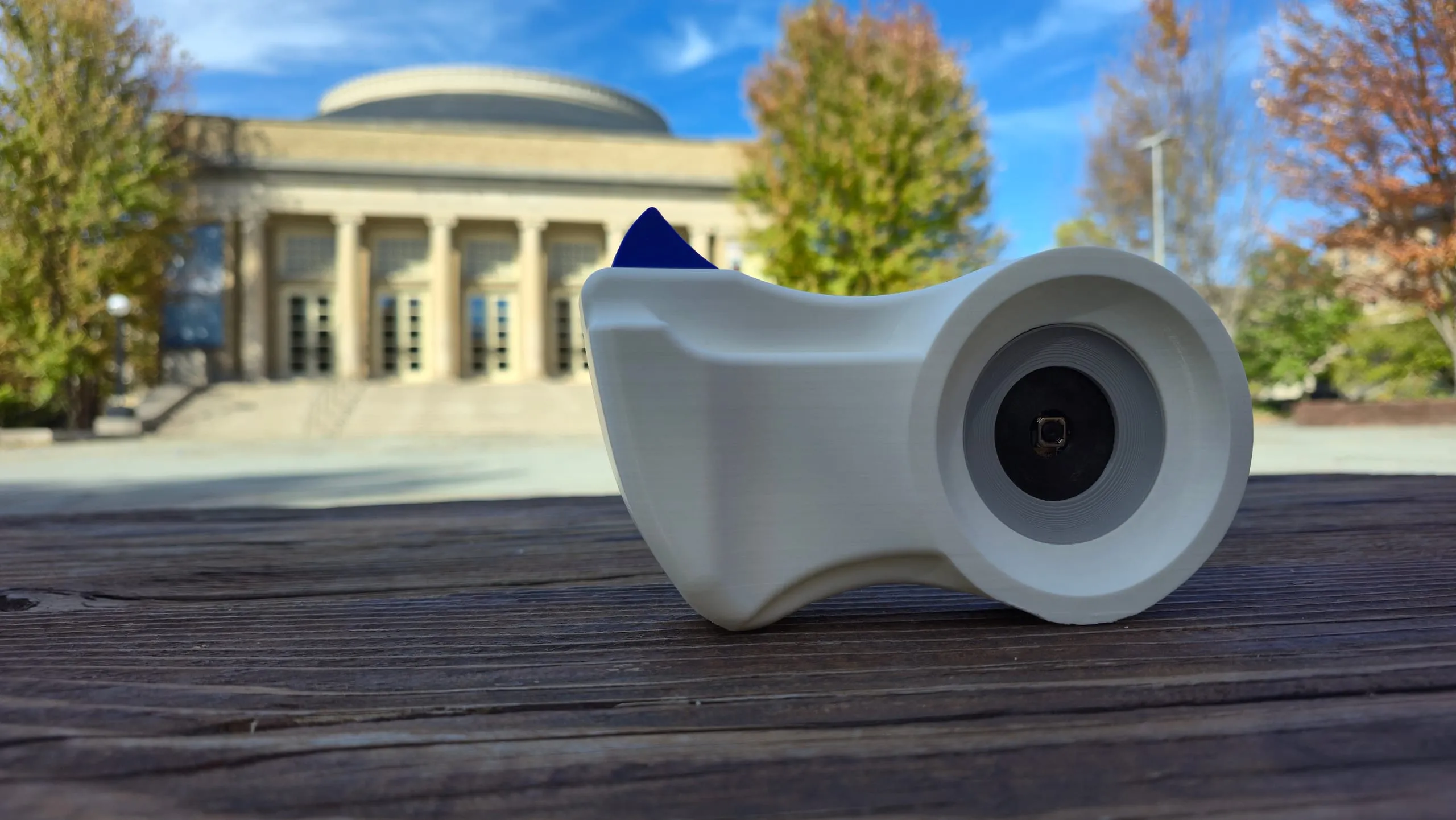
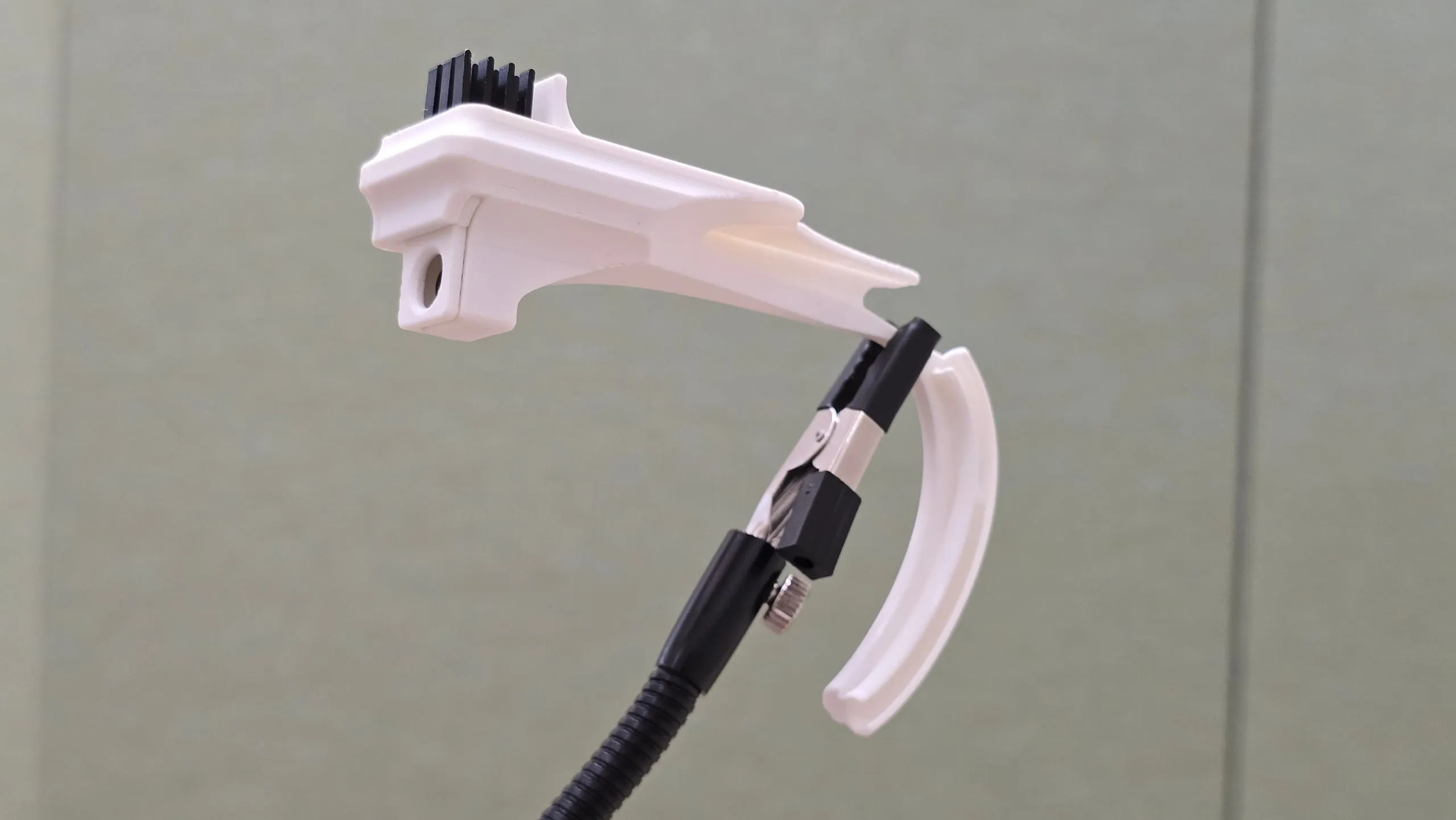
Research is where I design the questions behind what I make.
As of now, AI isn’t nearly as ubiquitous in hardware as it is in software. However, it is maturing at a pace where the tangible world is positioned as its next expansion. Through researching how humans and AI can connect through thought-provoking design, I hope to help guide AI’s manifestation into physical products, interfaces, and more.
At the Machine Poetics Lab, I work with Assistant Professor Sang Leigh in making AI-driven devices that create evocative human-computer interactions. The lab challenges traditional norms of technology’s roles in human life, showing potential ways we can live with technology in the future.
Research Works
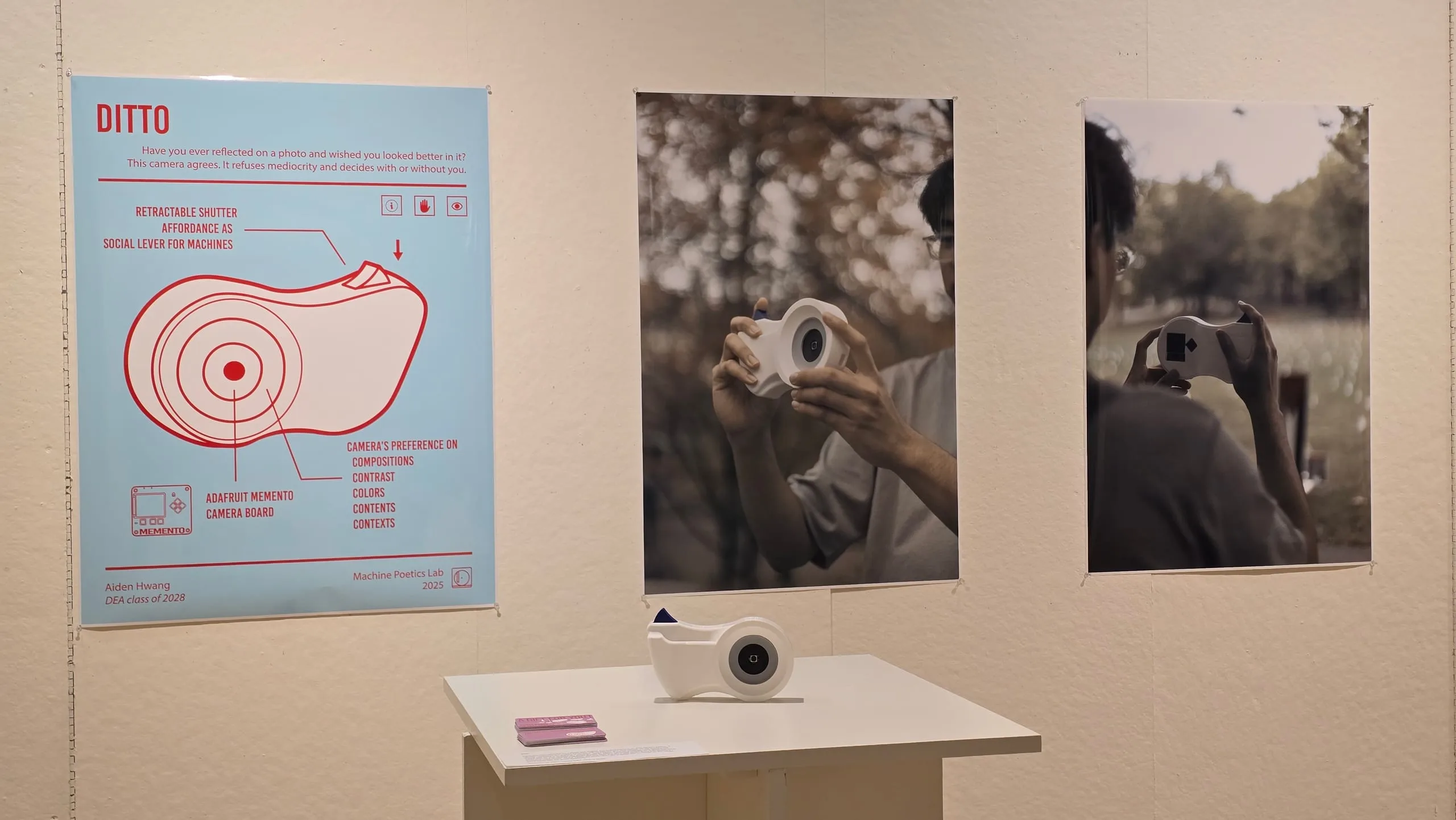
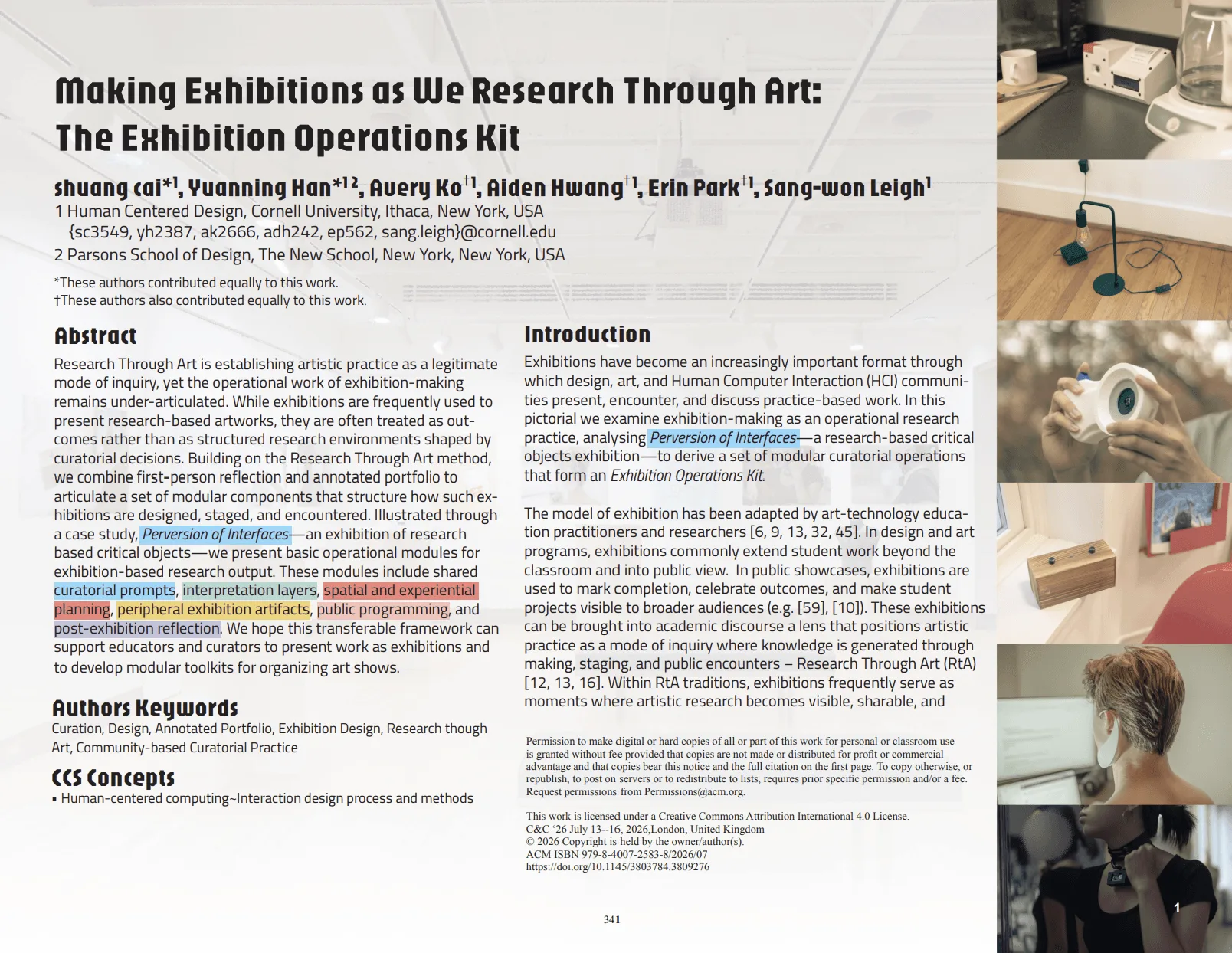
Exhibition: Perversion of Interfaces
Humans and AI butting heads: exploring the speculative boundaries of HCI
Co-Authored Publication: ACM Creativity & Cognition 2026
Using exhibitions themselves as part of research
Research Honors
I am a Hunter R. Rawlings III Cornell Presidential Research Scholar, which has enabled me to take on financially supported research early in my college journey. I currently serve as the president of the Rawlings Scholars, facilitating program activities and expanding scholar connections around campus and beyond.