Consensus
An earpiece that manipulates the wearer’s social perception
- Semester
- Spring 2026
- Role
- Concept, modeling, and fabrication
- Tools
- Autodesk Fusion, 3D printing, Seeed Studio XIAO ESP32-S3 Sense
- Semester
- Spring 2026
- Role
- Concept, modeling, and fabrication
- Tools
- Autodesk Fusion, 3D printing, Seeed Studio XIAO ESP32-S3 Sense
Consensus explores the gray area of physical human-computer interaction. Everyone explores how AI can improve life, but few are willing to show the dystopia that can easily arise from the same technology. However, creating such designs is of equal importance in order to bring awareness to the pitfalls of such a powerful technology and how we can avoid such mistakes in the future.
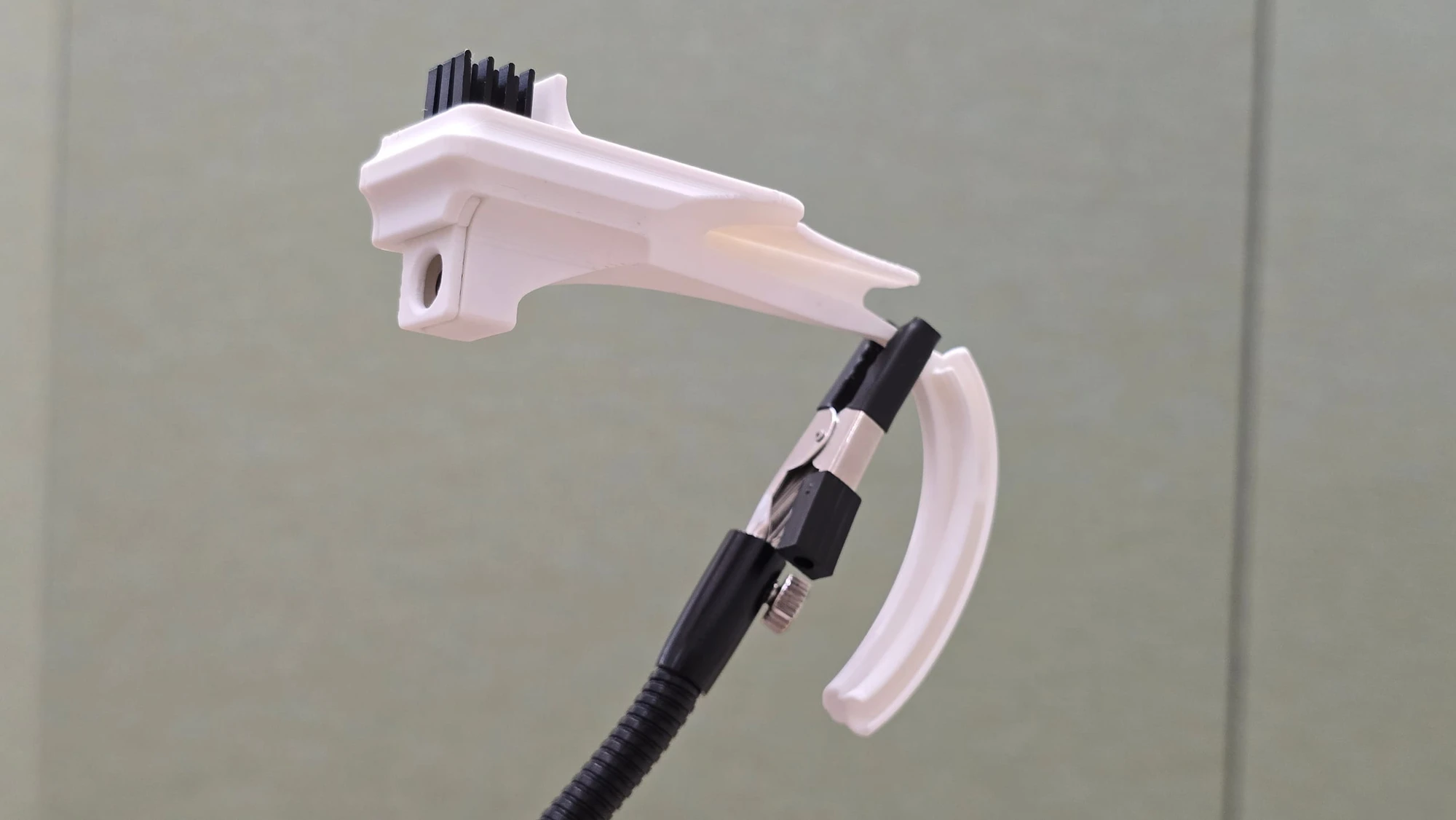
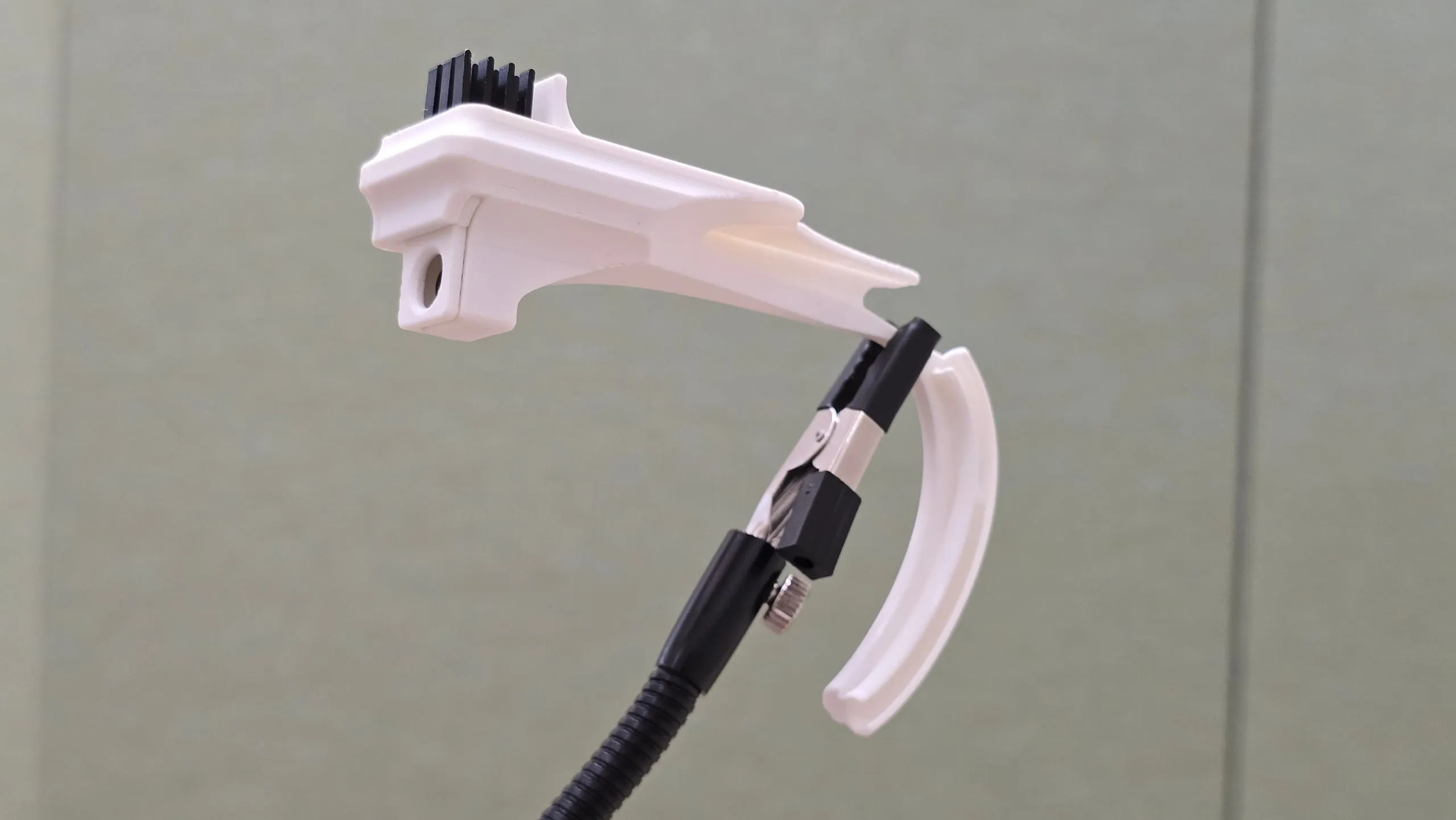
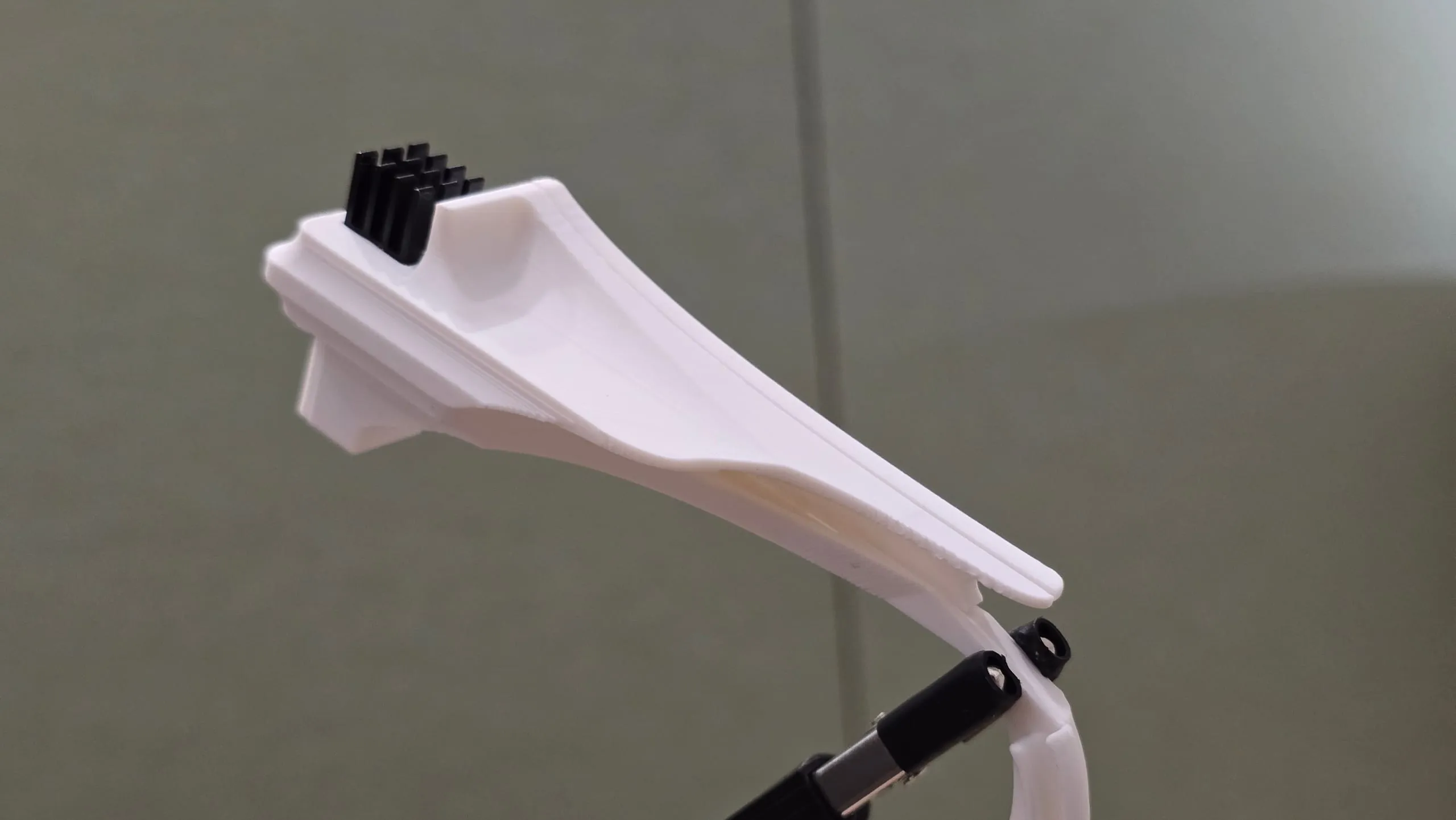
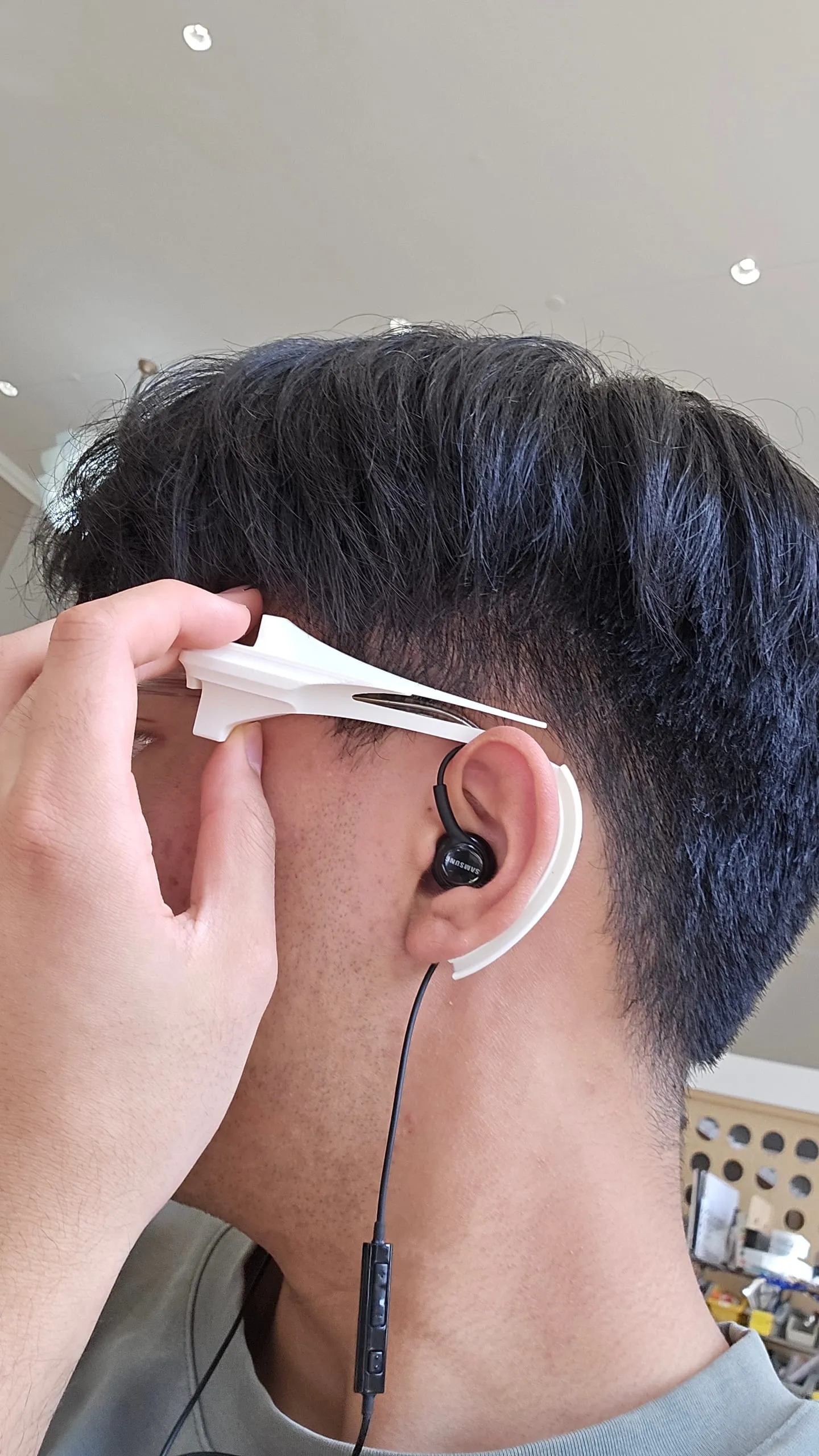
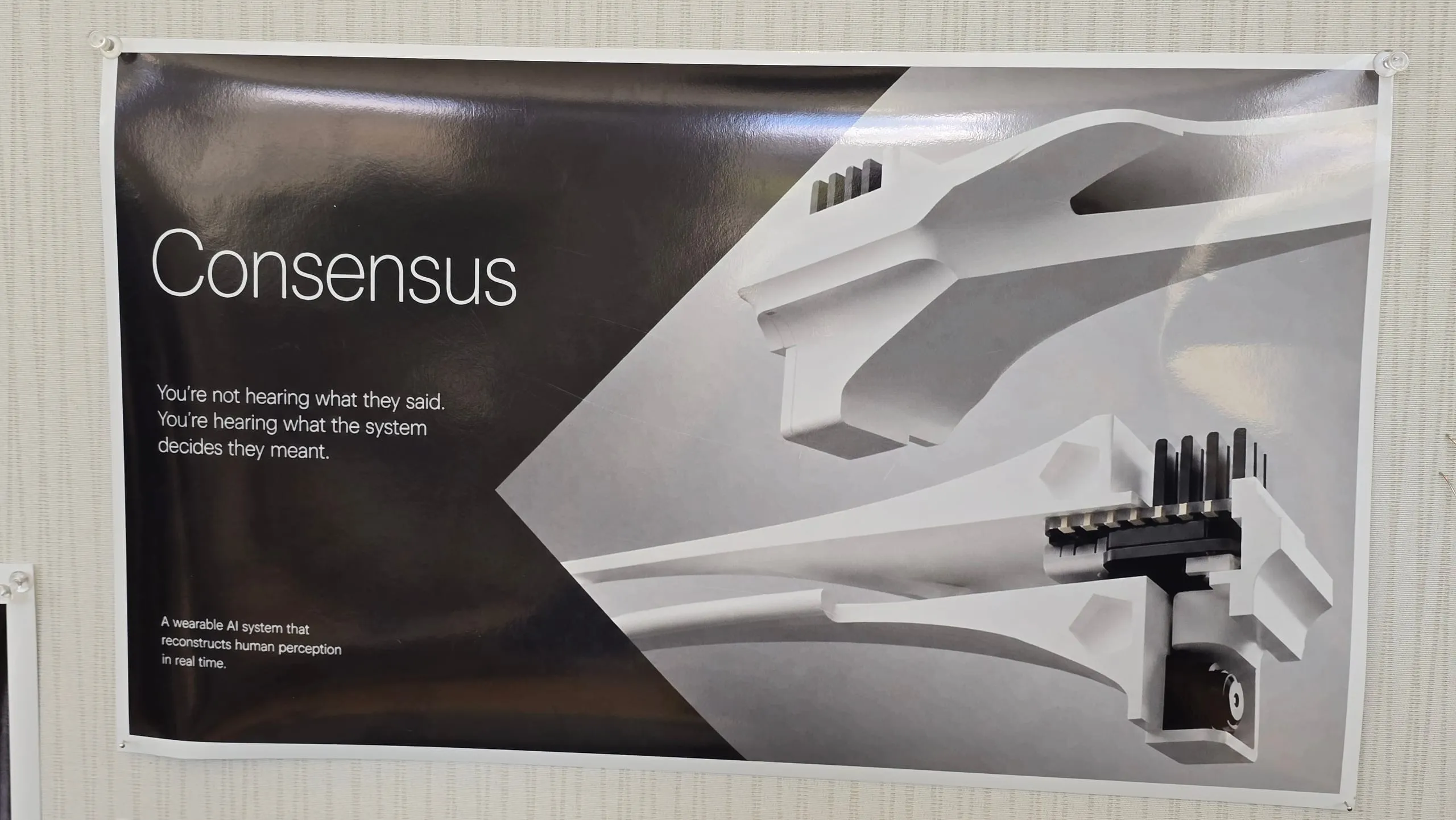
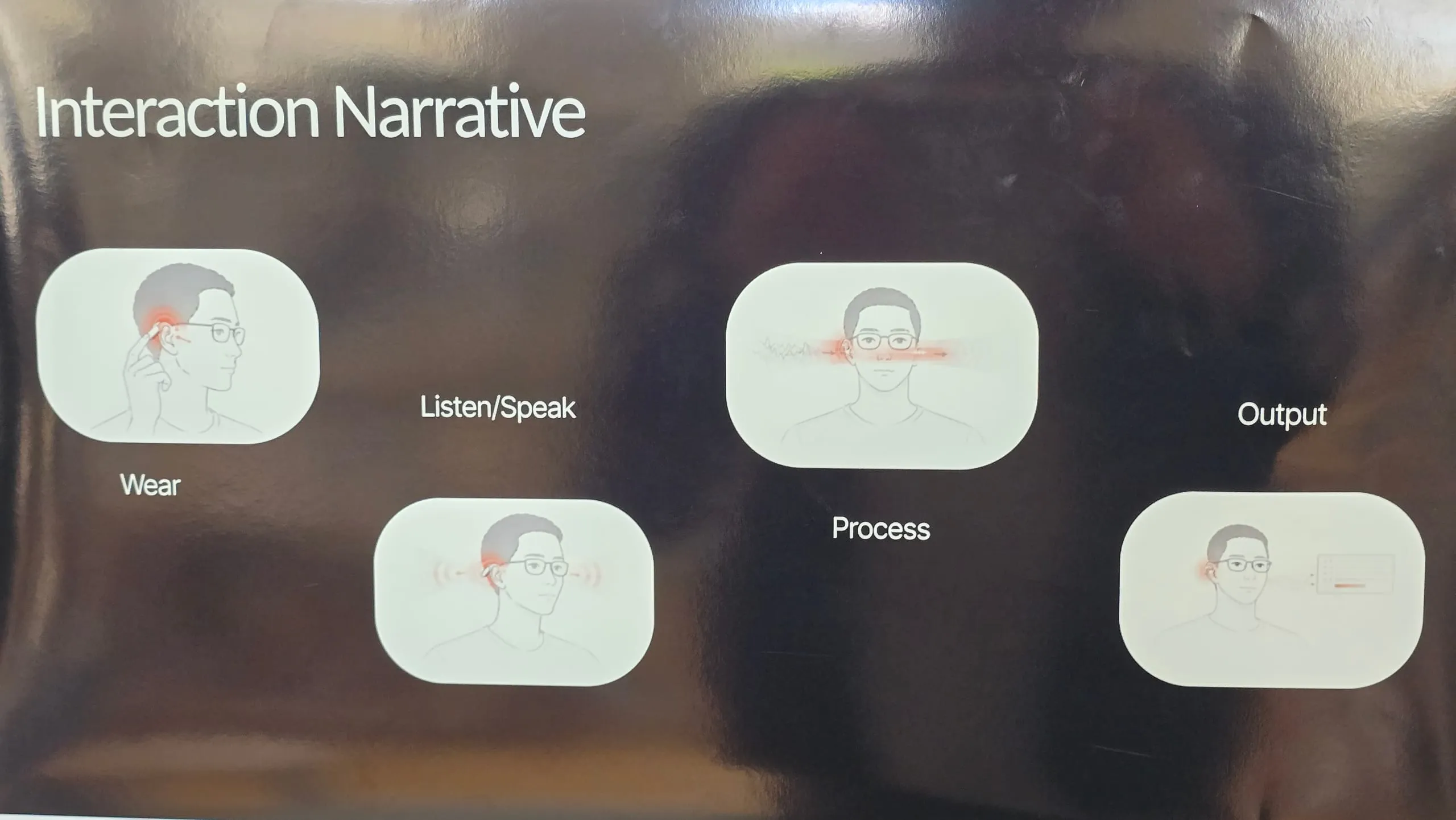
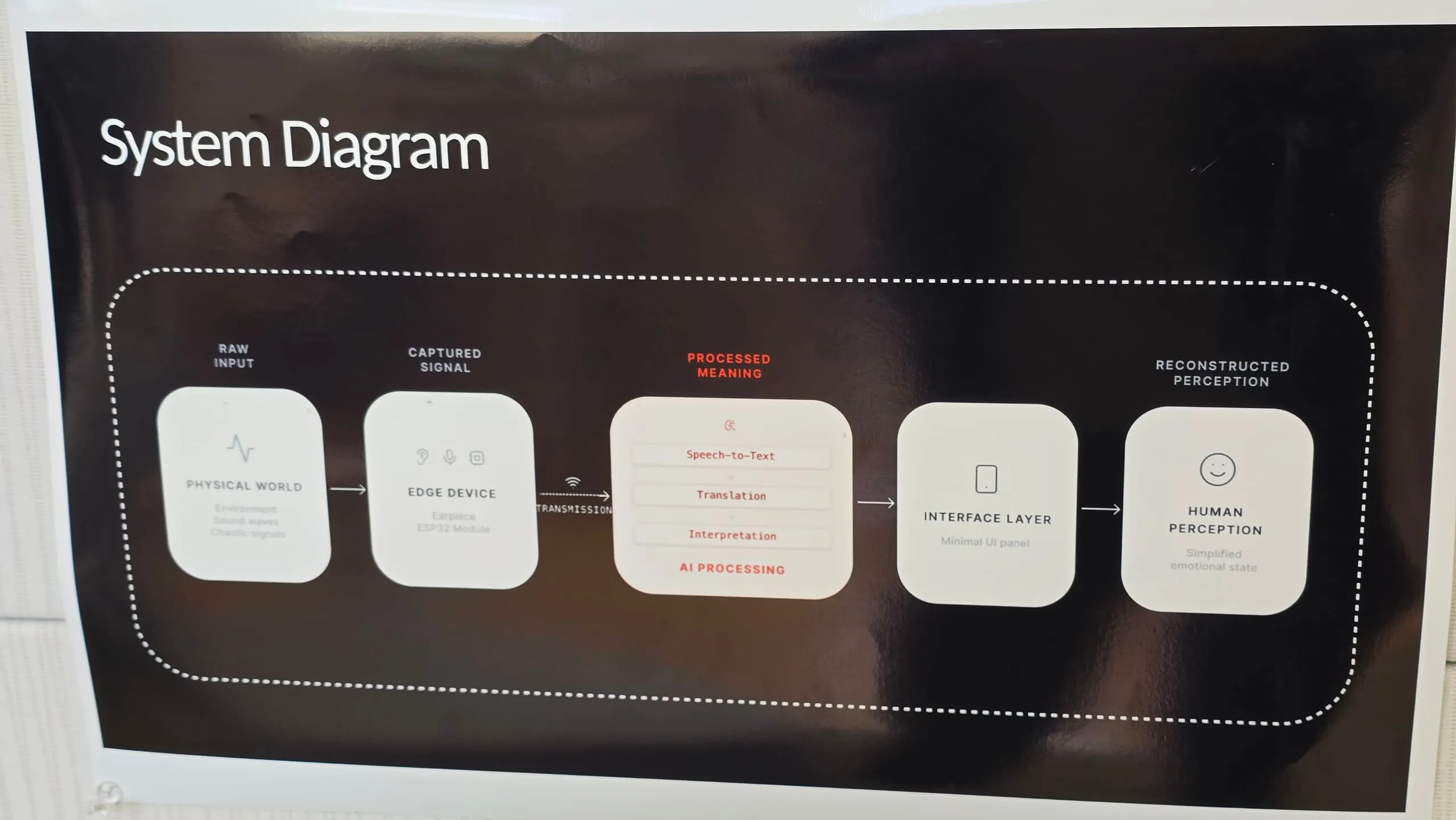
Consensus is an earpiece worn on the side of a user’s head, similar to a set of workout earbuds that loop around the ear. Its camera and microphone identify and analyze the speech of the user and whoever they are talking to, and in real time, it converts the statements of the person or audio source the user is talking to into speech matching a set of conditions set either by the user, or, more insidiously, by someone else who controls the device’s settings. This project was built as a critical, speculative design demonstration to display how far AI can go before it becomes more than a computer.
This was my final project for Cornell’s DEA 4403 Designing Tomorrow course, guided by Asst. Professor Sang Leigh. Prof. Leigh is also my faculty mentor and Principal Investigator at the Machine Poetics Lab.
I conceptualized, modeled, and fabricated Consensus; my group partner designed the posters, and we both collaborated on coding the demonstration software and iterative design changes.

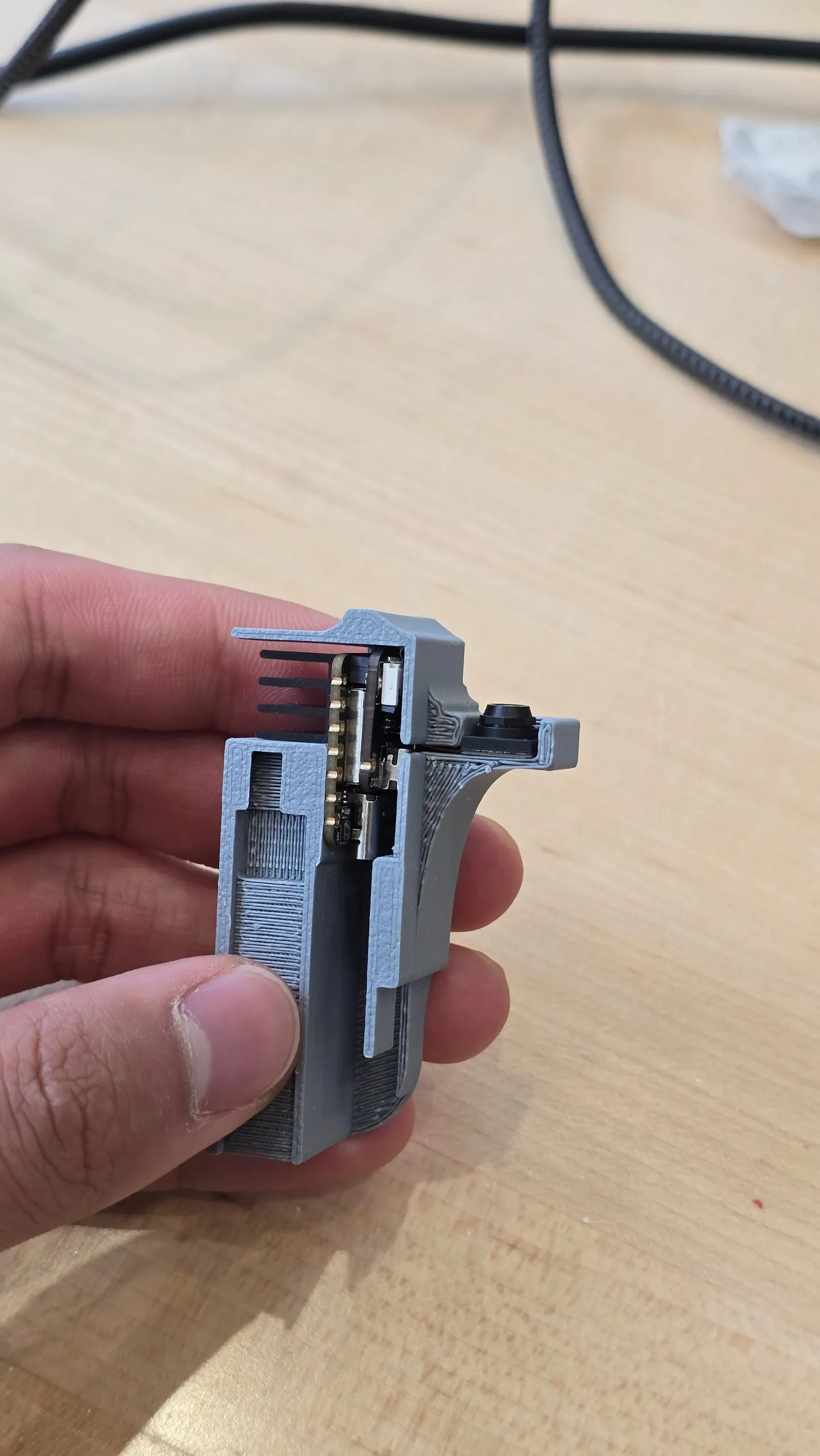
Consensus contains a Seeed Studio XIAO ESP32-S3 Sense board, which allows a camera, microphone, and microcontroller to fit within a wearable format. Conceptually, it would also contain a battery, small speaker, and an onboard AI model that transcribes and re-broadcasts speech directly into the user’s ear in real time.
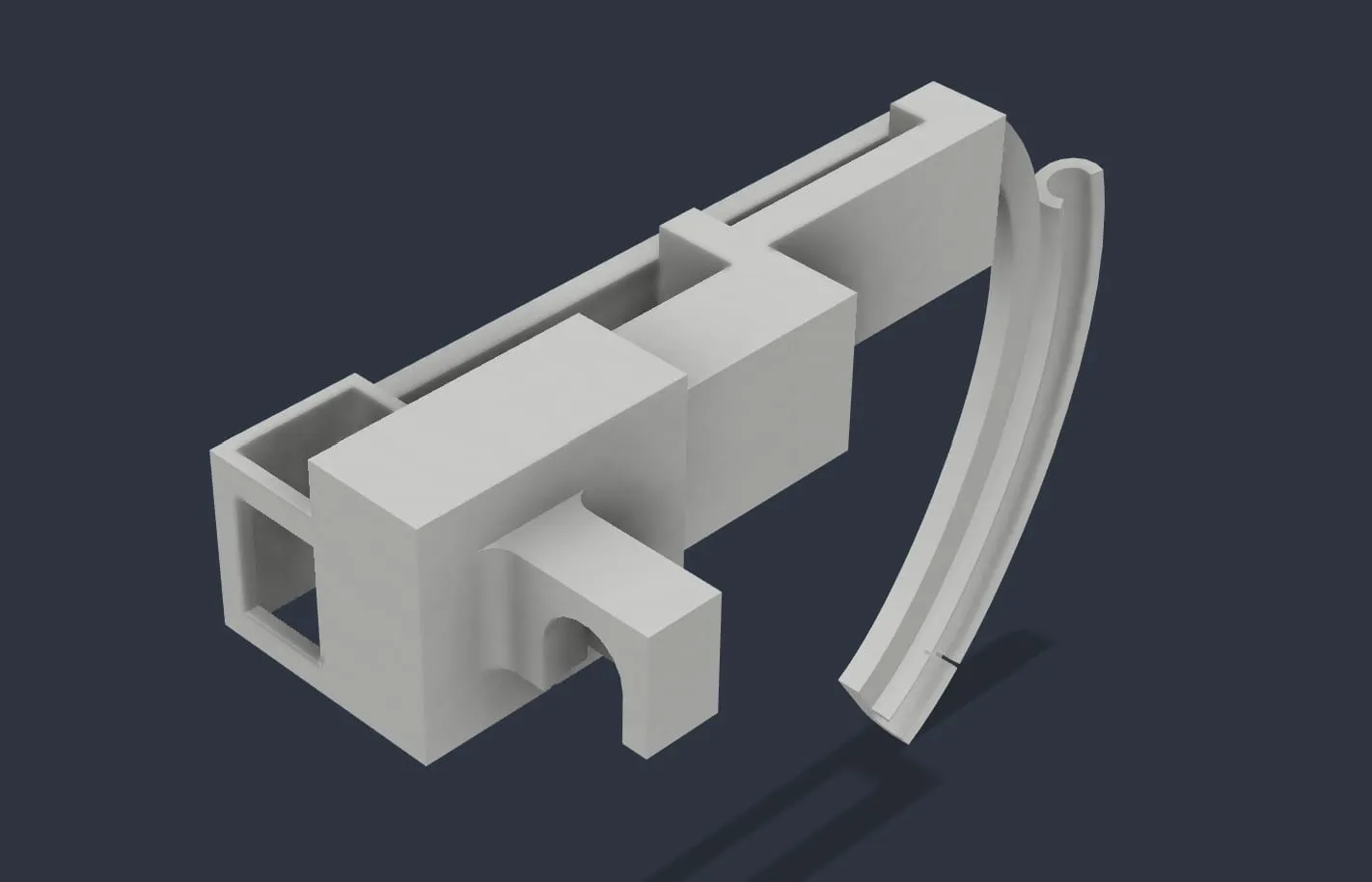
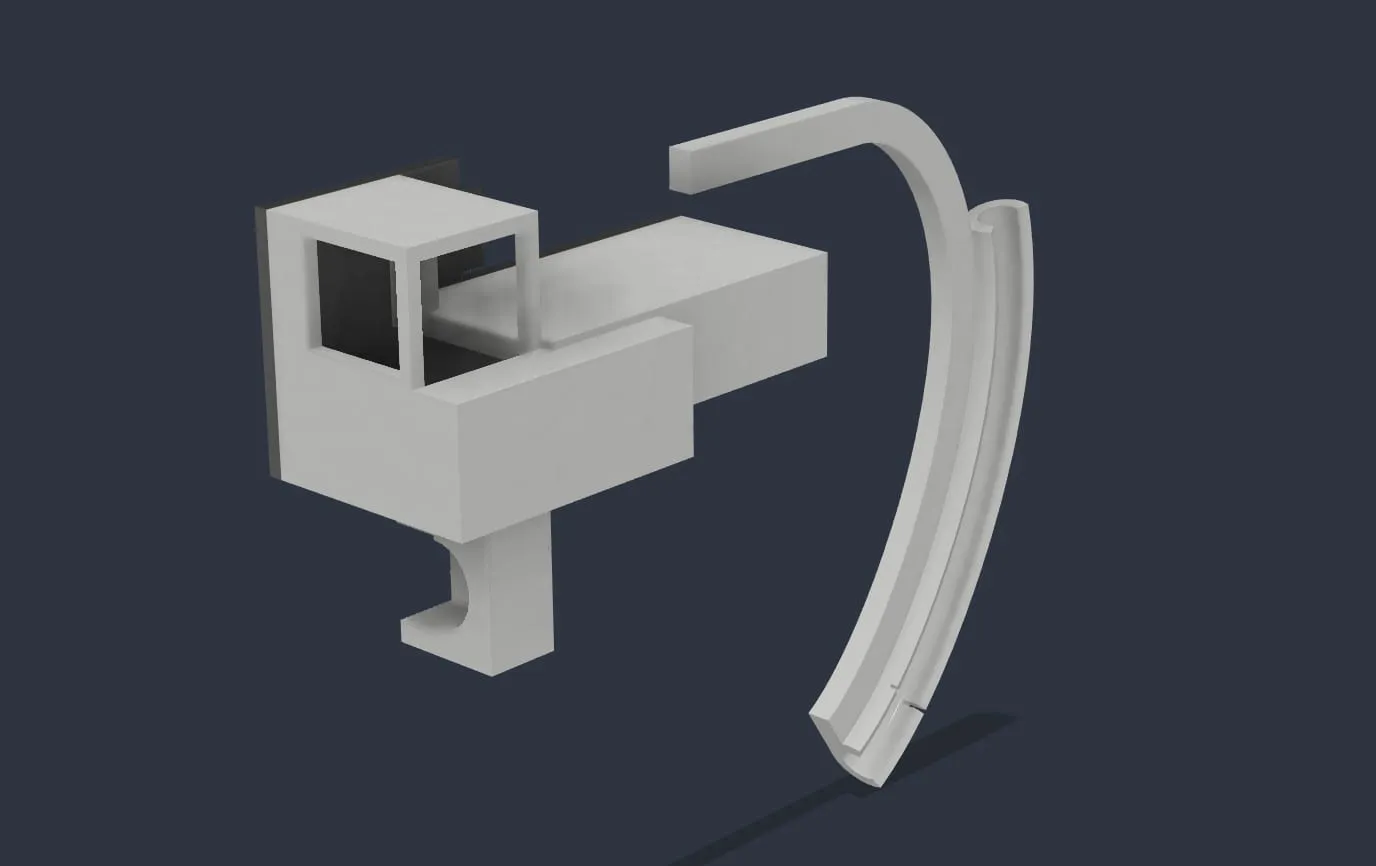
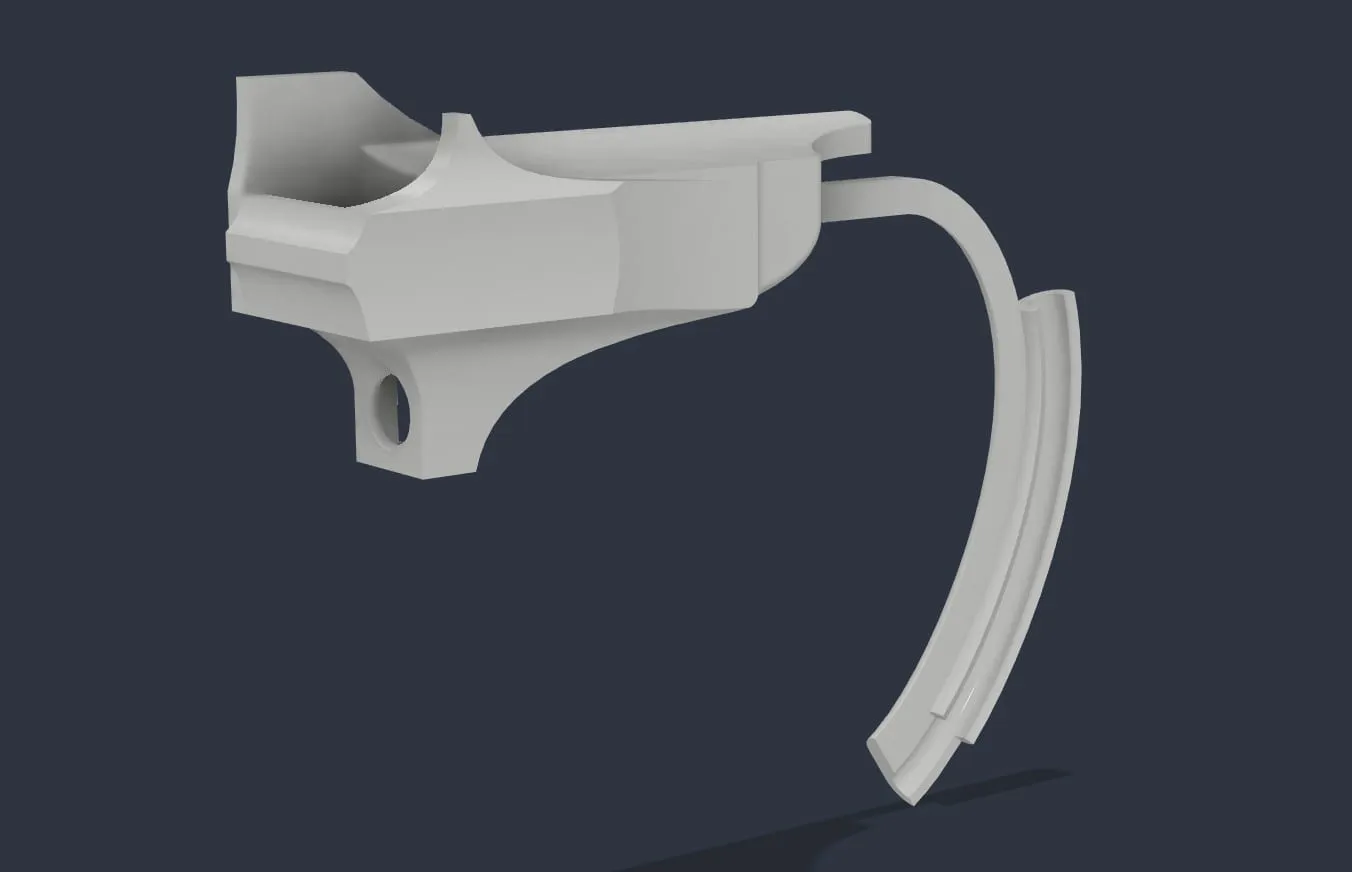
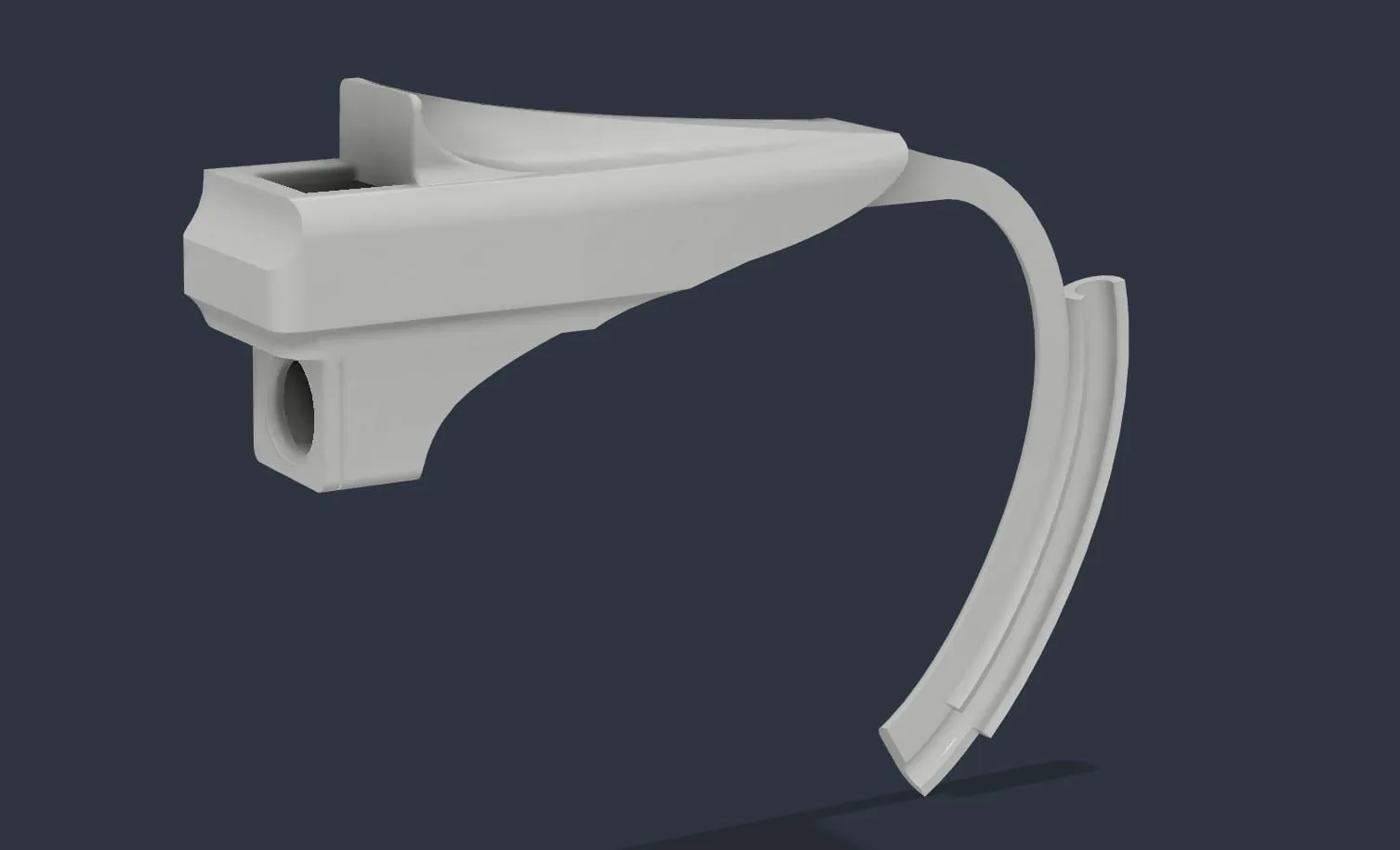
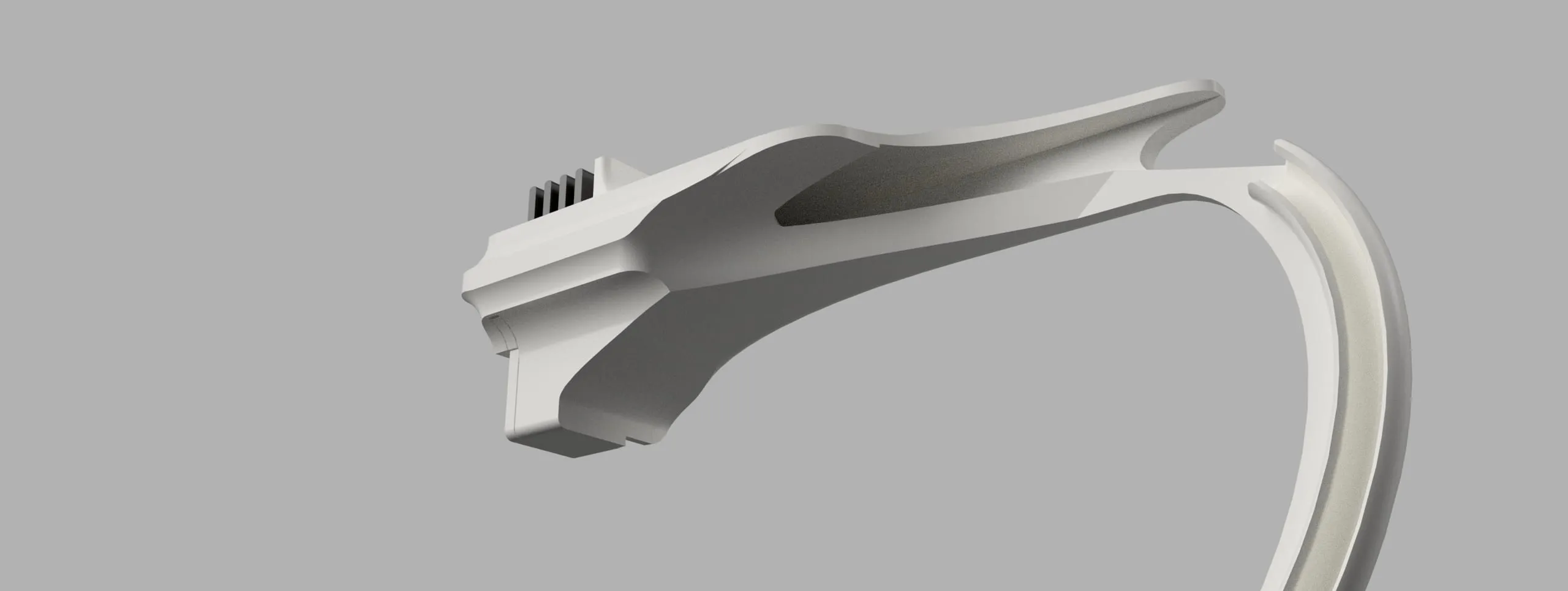
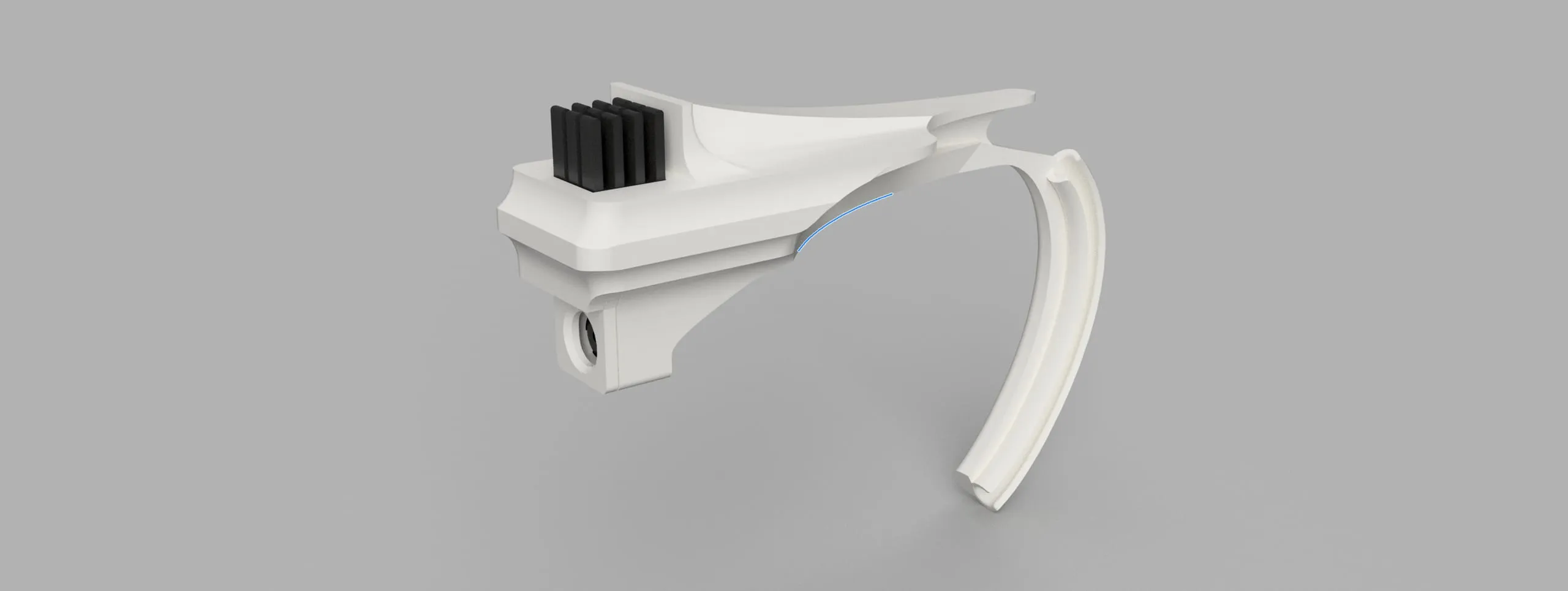
I modeled and rendered Consensus with Autodesk Fusion, aiming for a shape that was streamlined and varied like an ear, but as a wearable device. It contains both exposed and hidden magnets in its assembly with its embedded electronics.
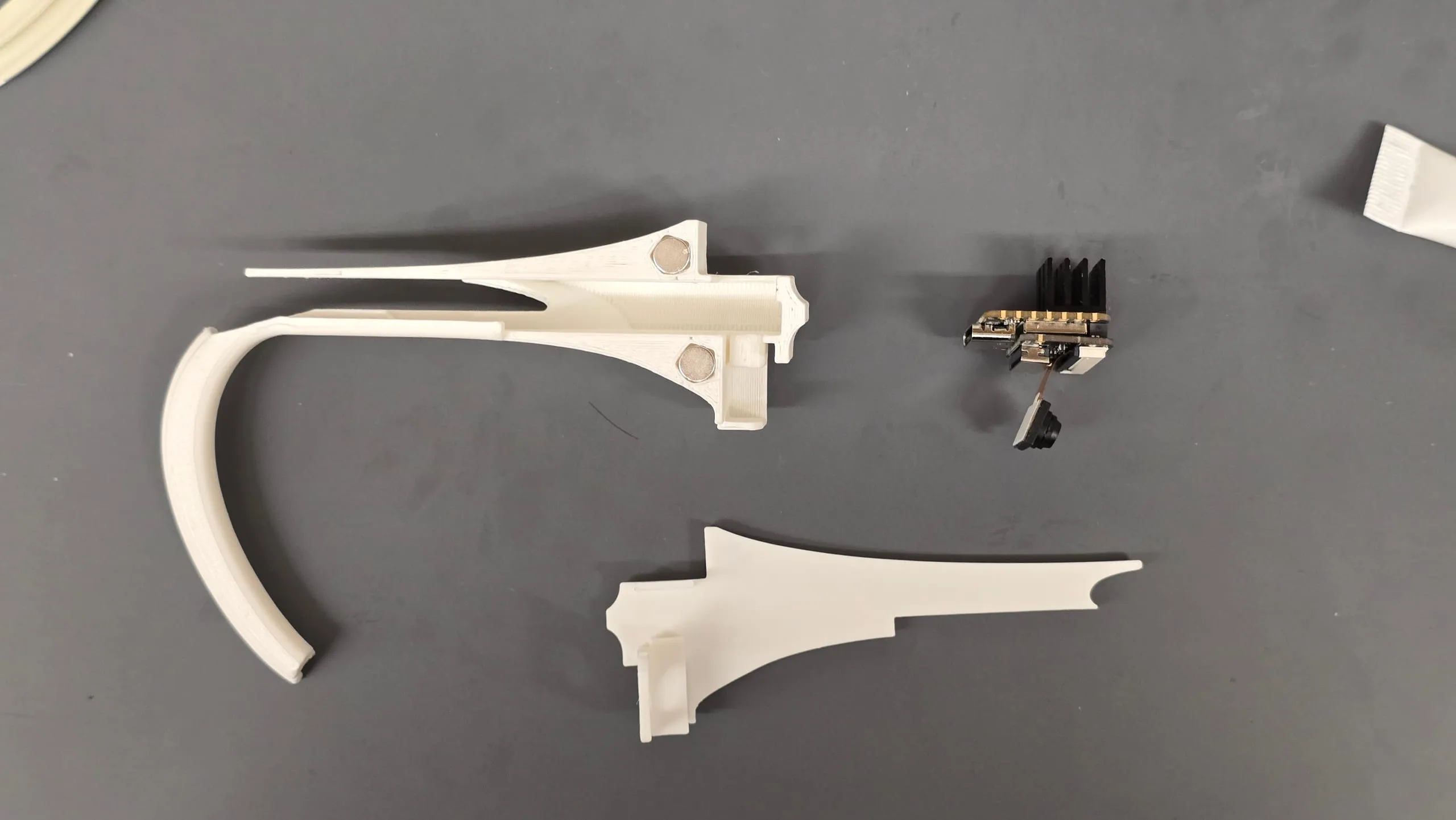
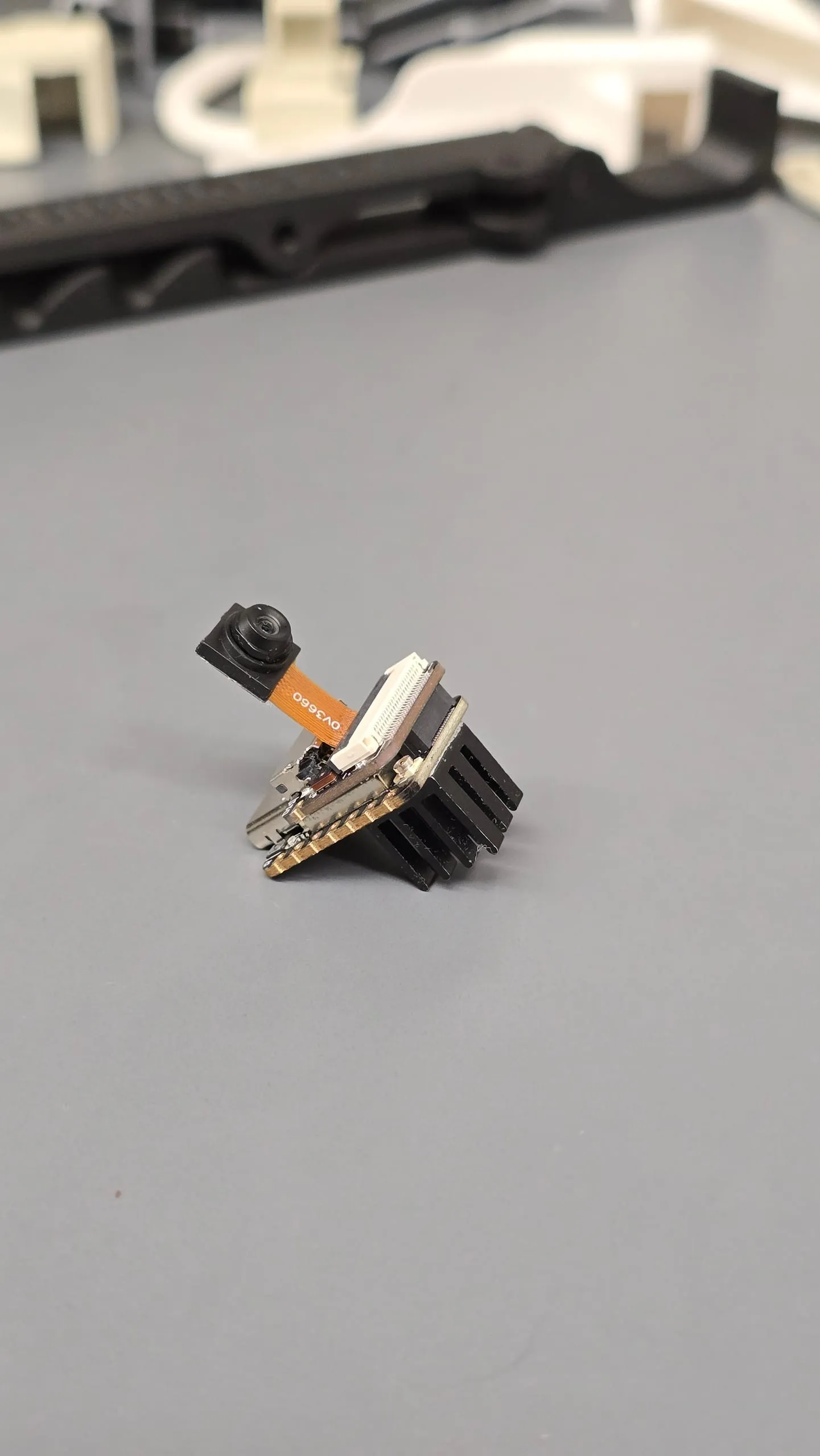
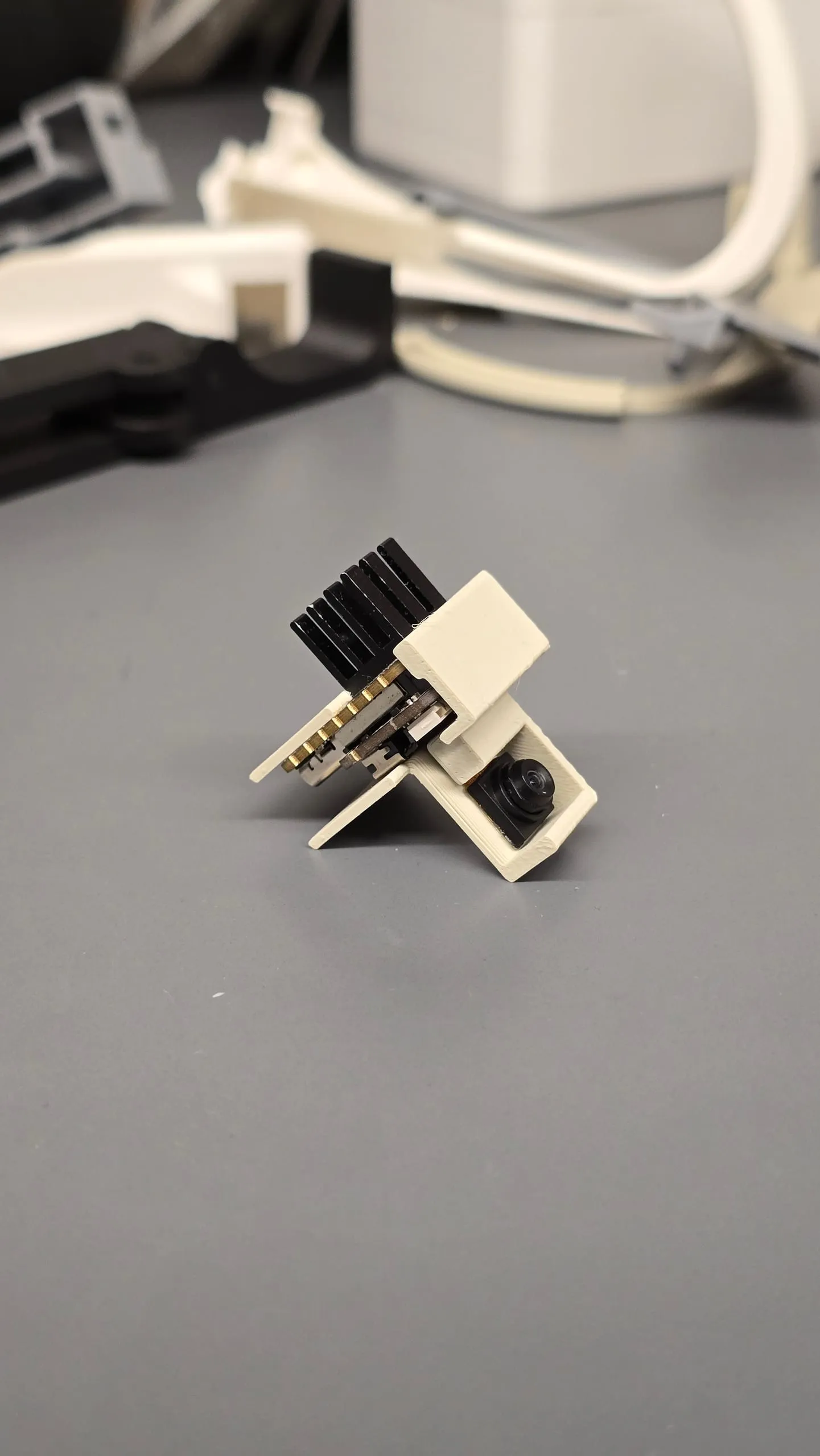
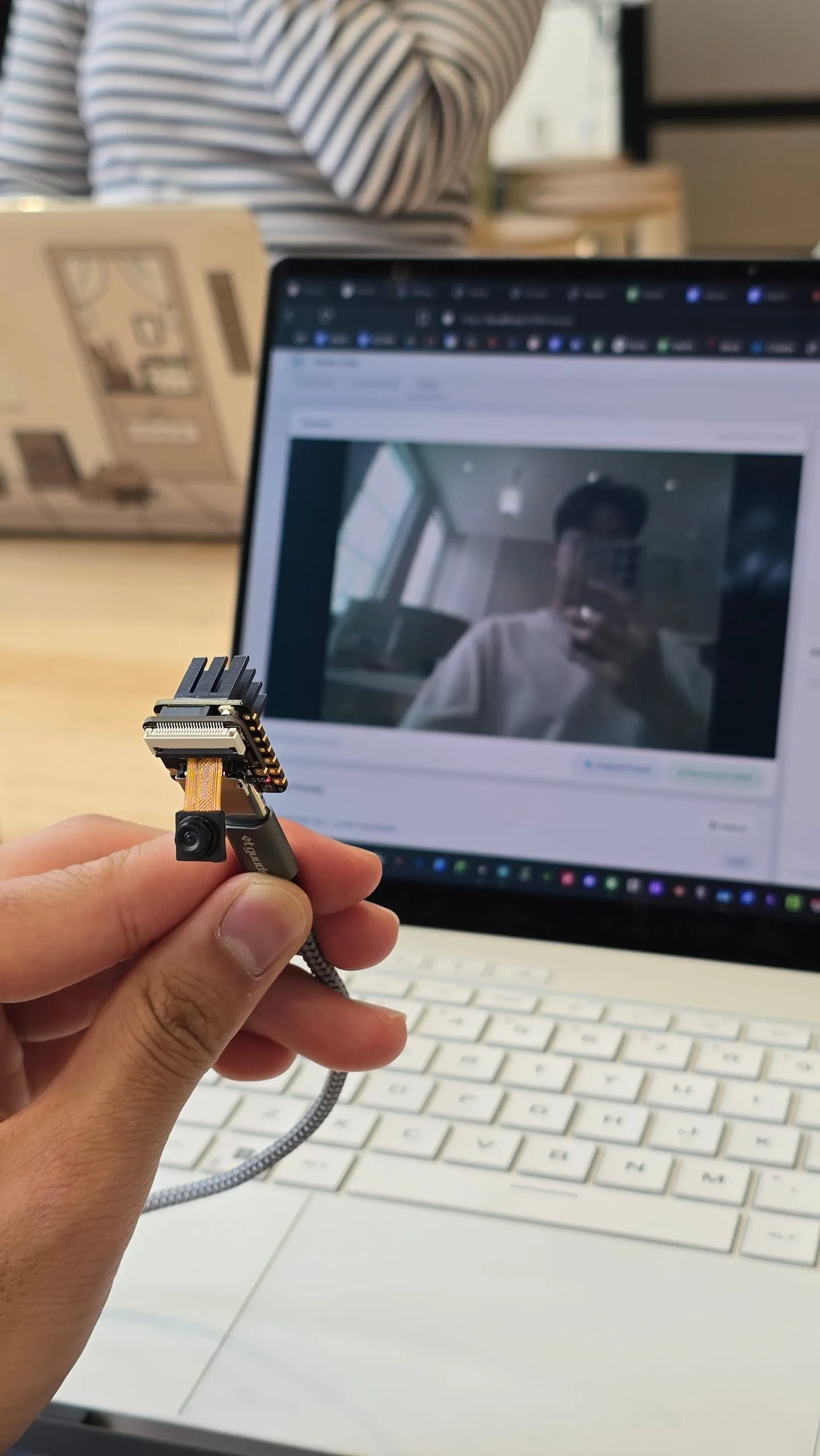
The ESP32-S3 Sense module with a heat sink.
Top image: Raw device
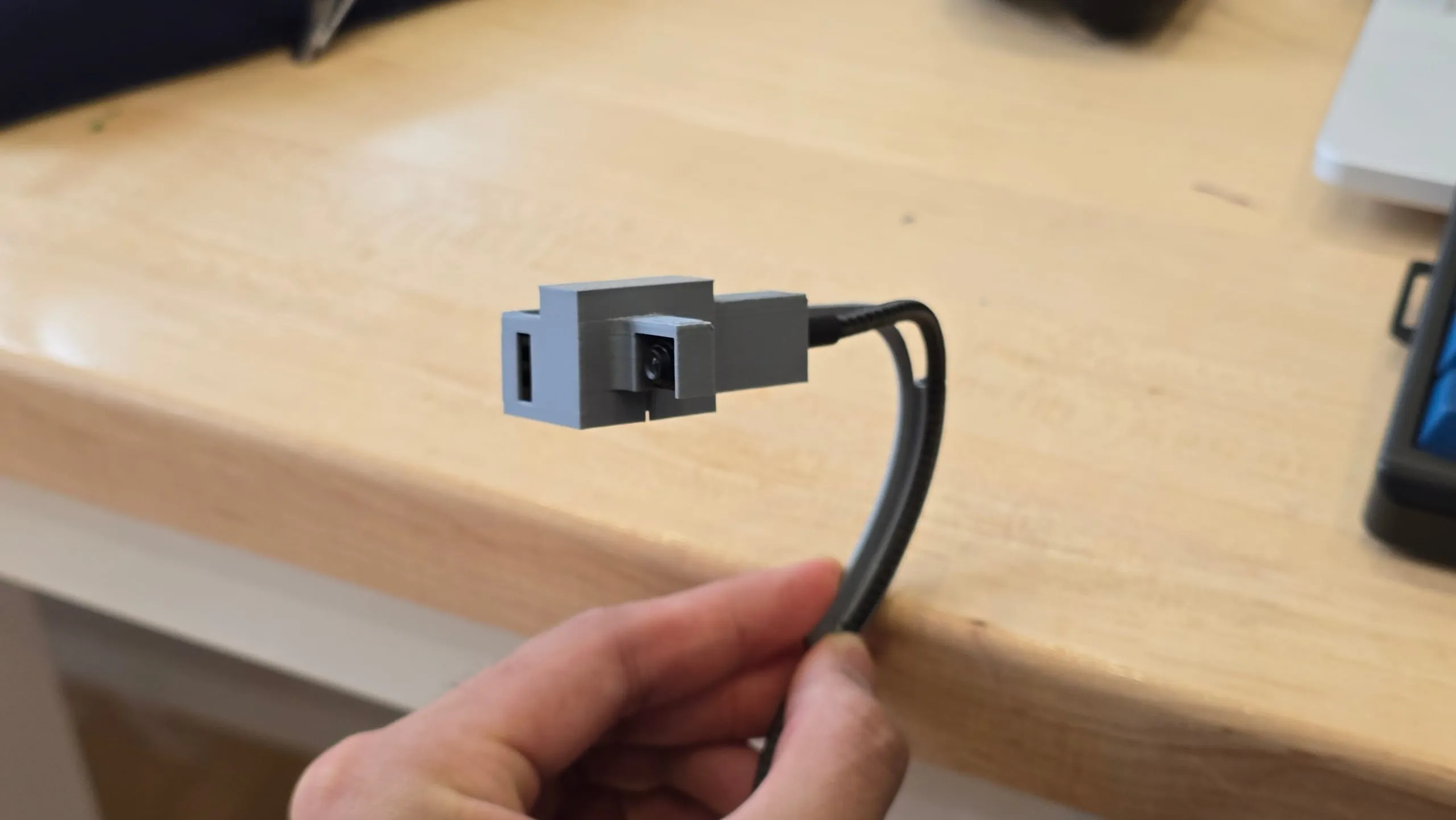
Bottom image: The module with a 3D-printed shell, testing initial dimensions
Consensus worn on the side of one’s head: an earbud is used to substitute for a speaker in this conceptual demonstration.
The ESP32-S3 Sense module with a heat sink.
Left image: Raw device
Right image: The module with a 3D-printed shell, testing initial dimensions
Consensus worn on the side of one’s head: an earbud is used to substitute for a speaker in this conceptual demonstration.
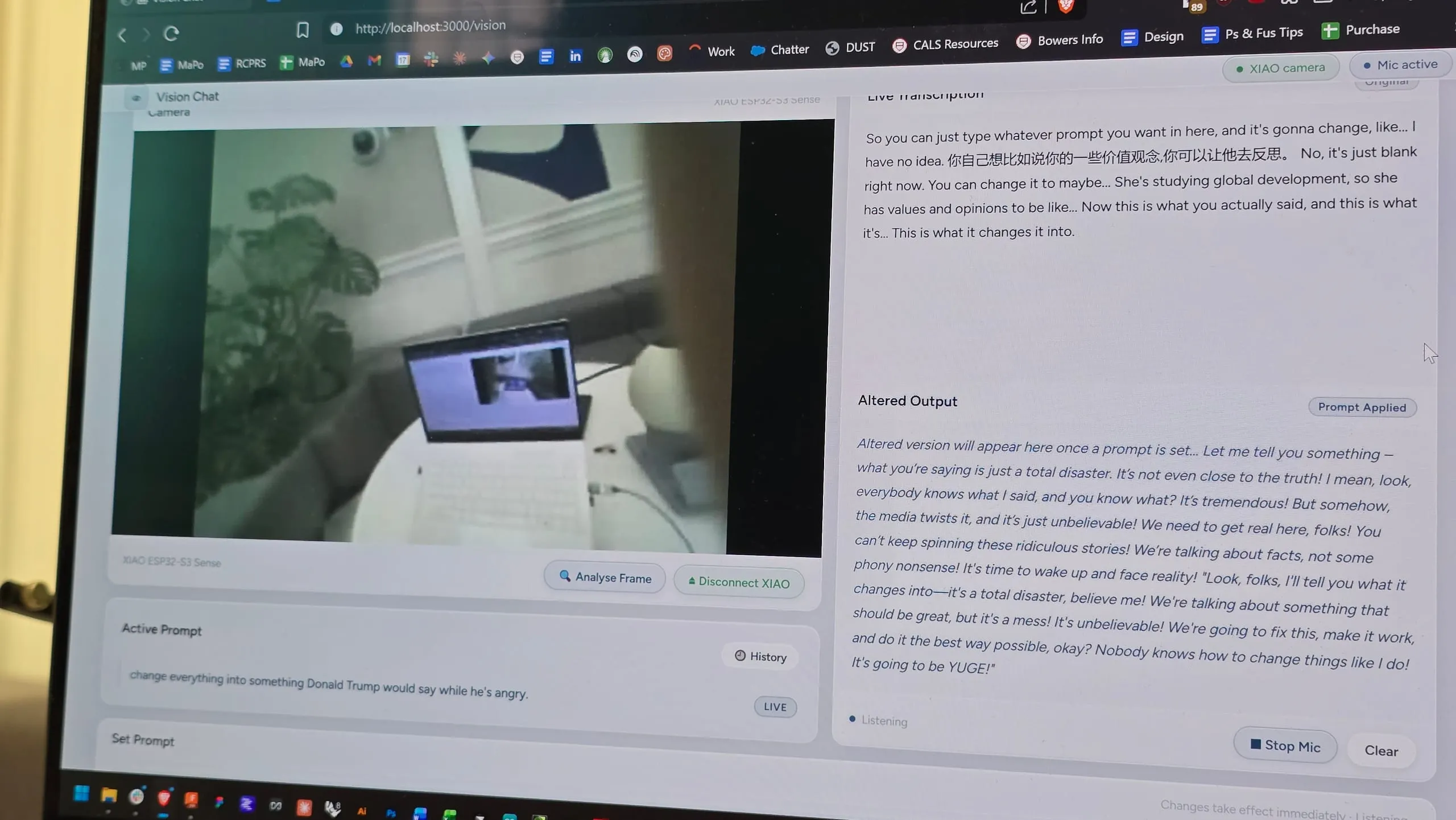
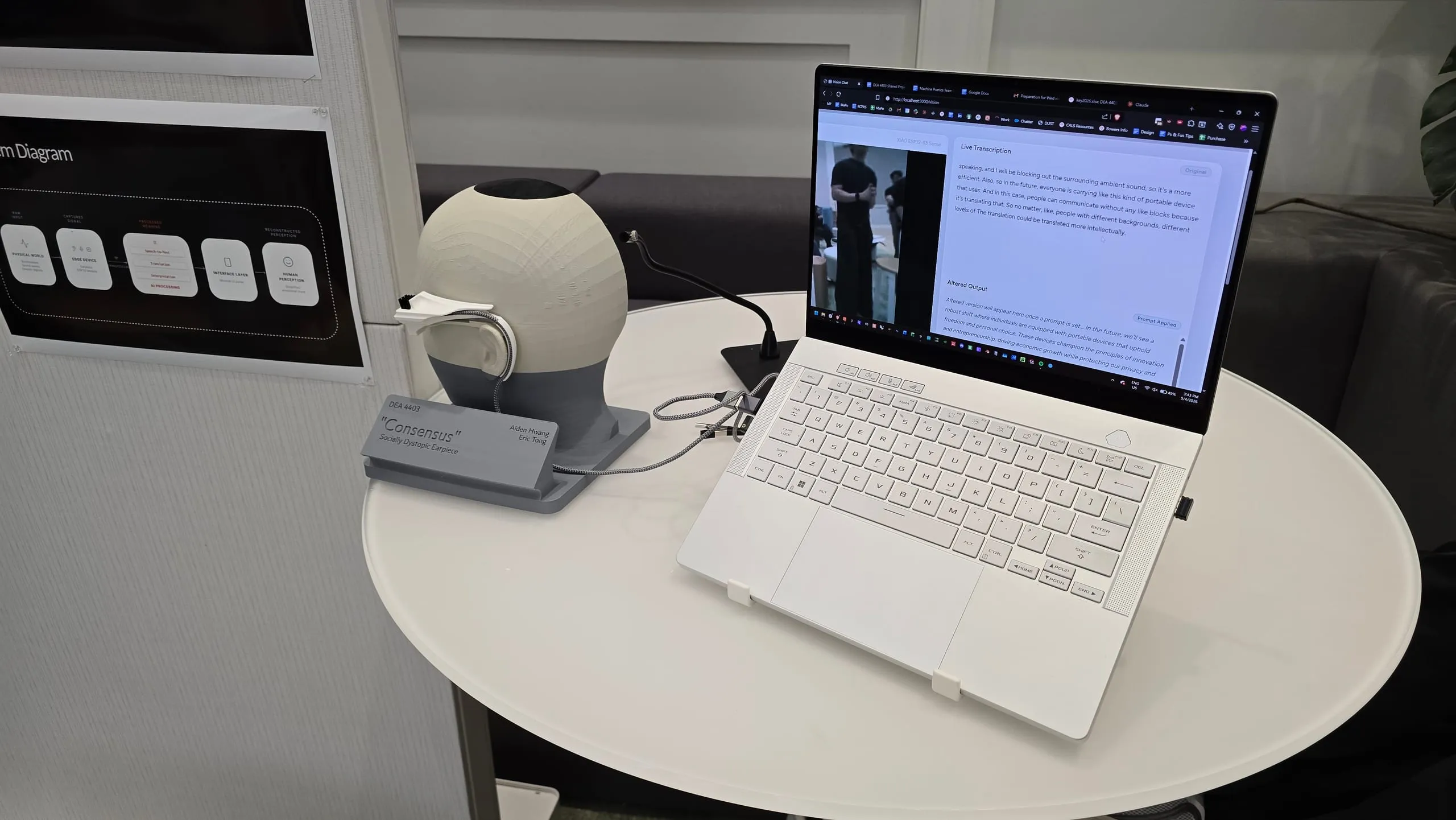
The in-class demo displayed a user’s first-person view along with the adjustable prompt Consensus follows to alter what it hears. In this class demo, it transcribed what people said around it and altered its transcriptions to align with a certain figure’s famous speech mannerisms. The altered transcriptions were generated in real time by a model.
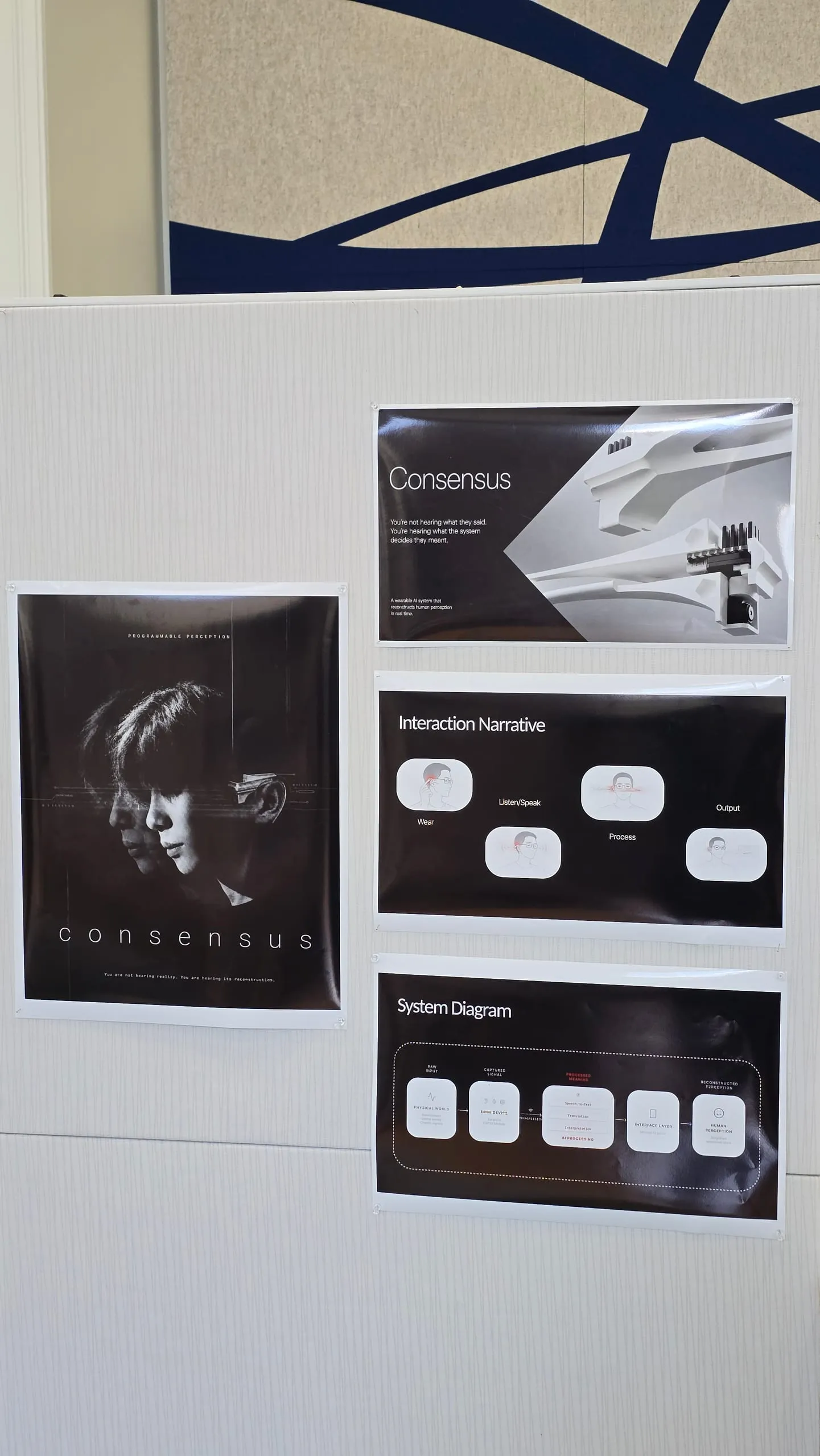
Consensus was presented physically with posters in my final presentation for DEA 4403 Designing Tomorrow. It is not intended to be developed past this state for now, but it is a meaningful exploration into the dystopian side of technology. Hopefully, we will know how to develop HCI for the future, both in the form of what to do and what not to do.
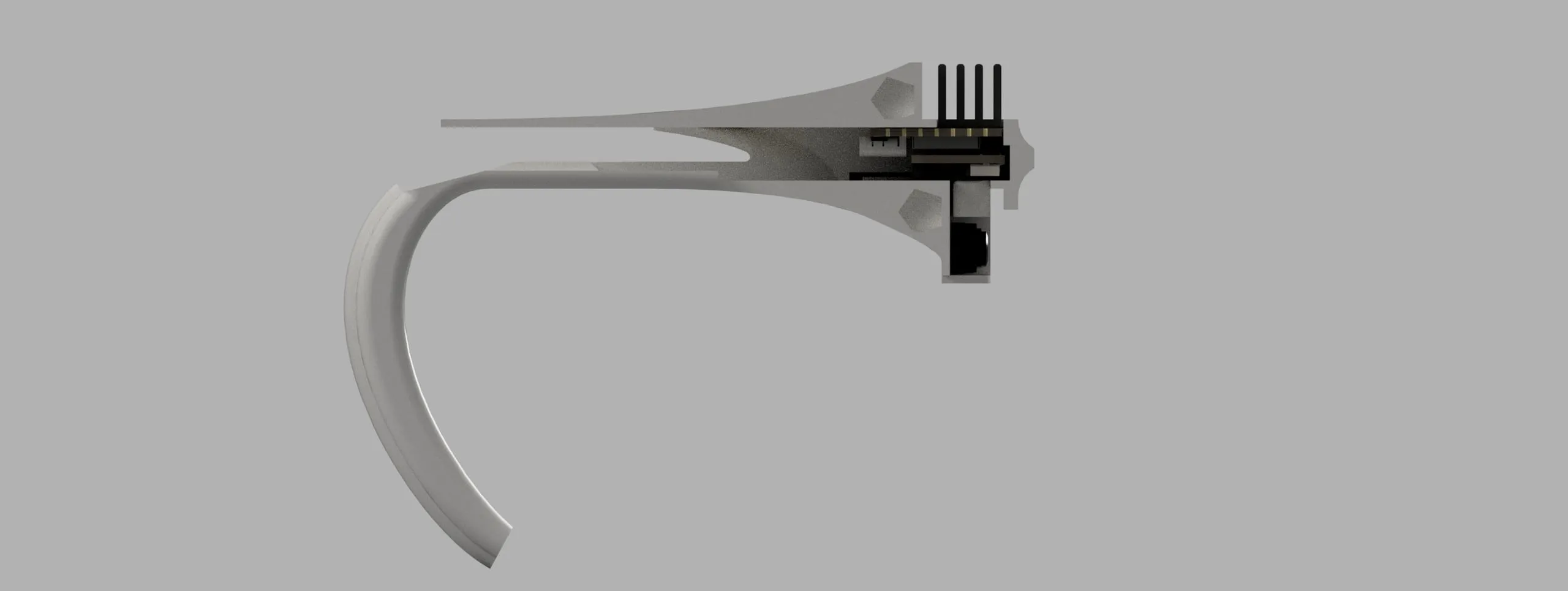
Rough Drafts
Click each image to enlargeTap each image to enlarge
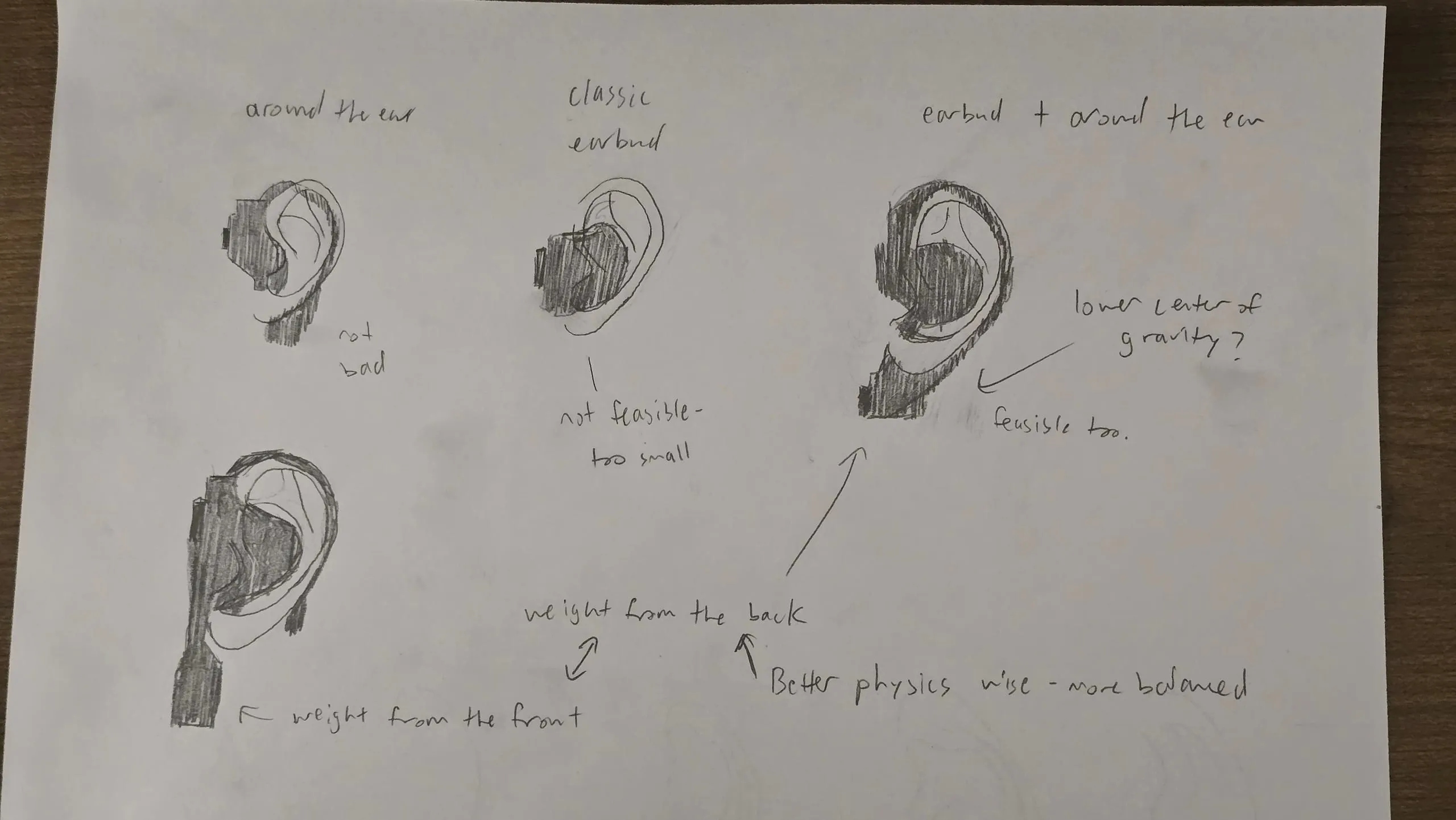
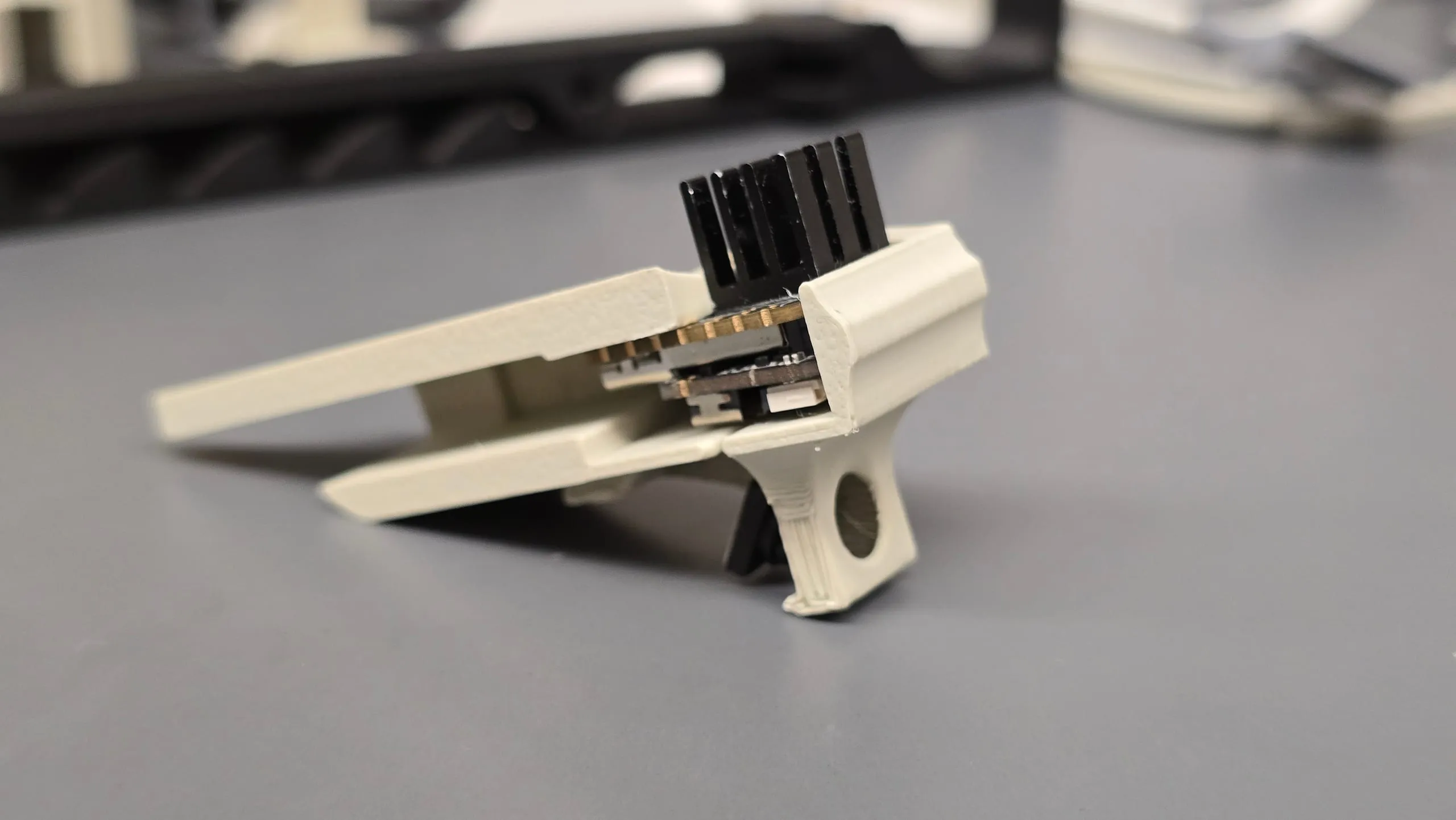
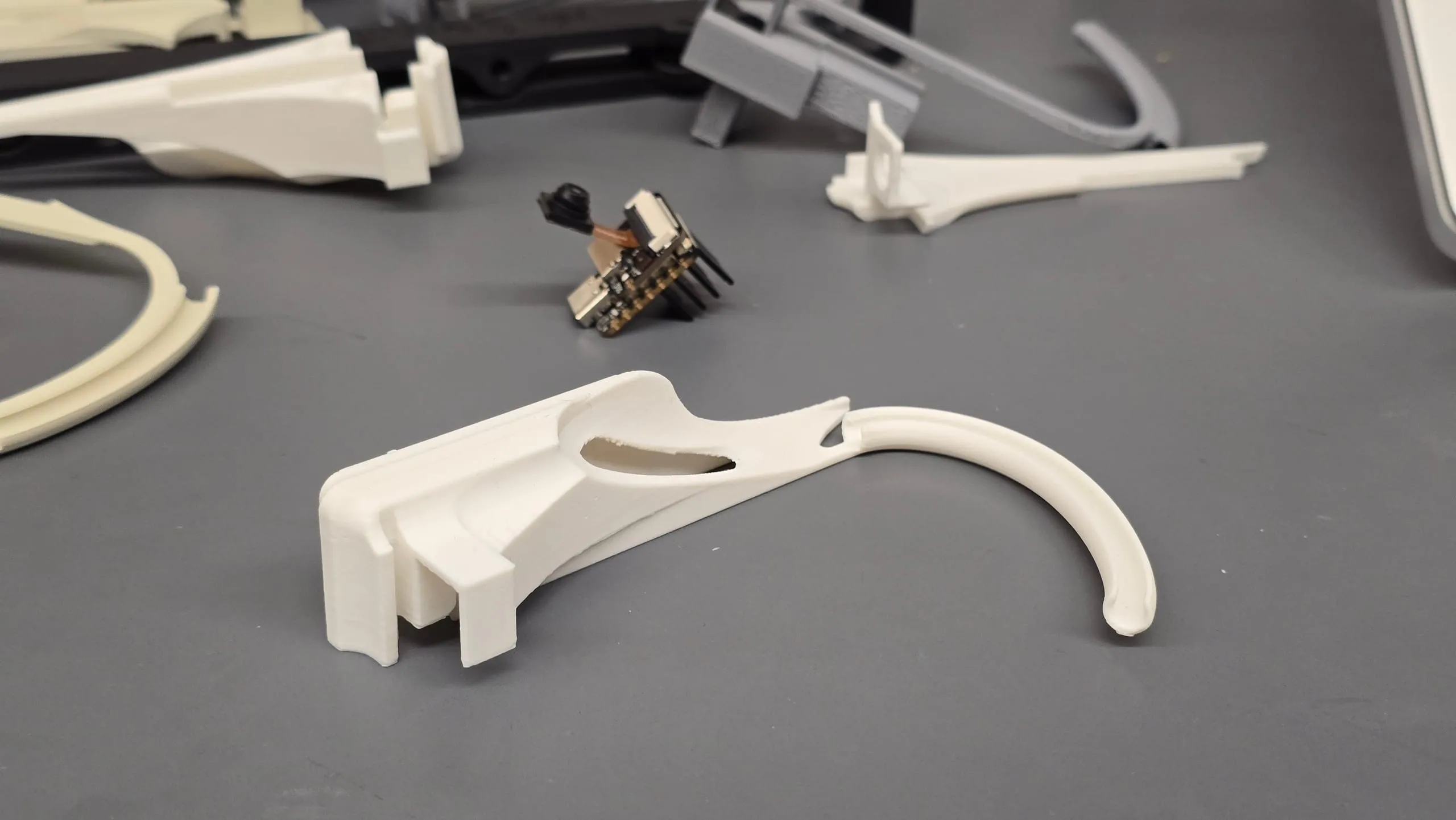
3D Modeling
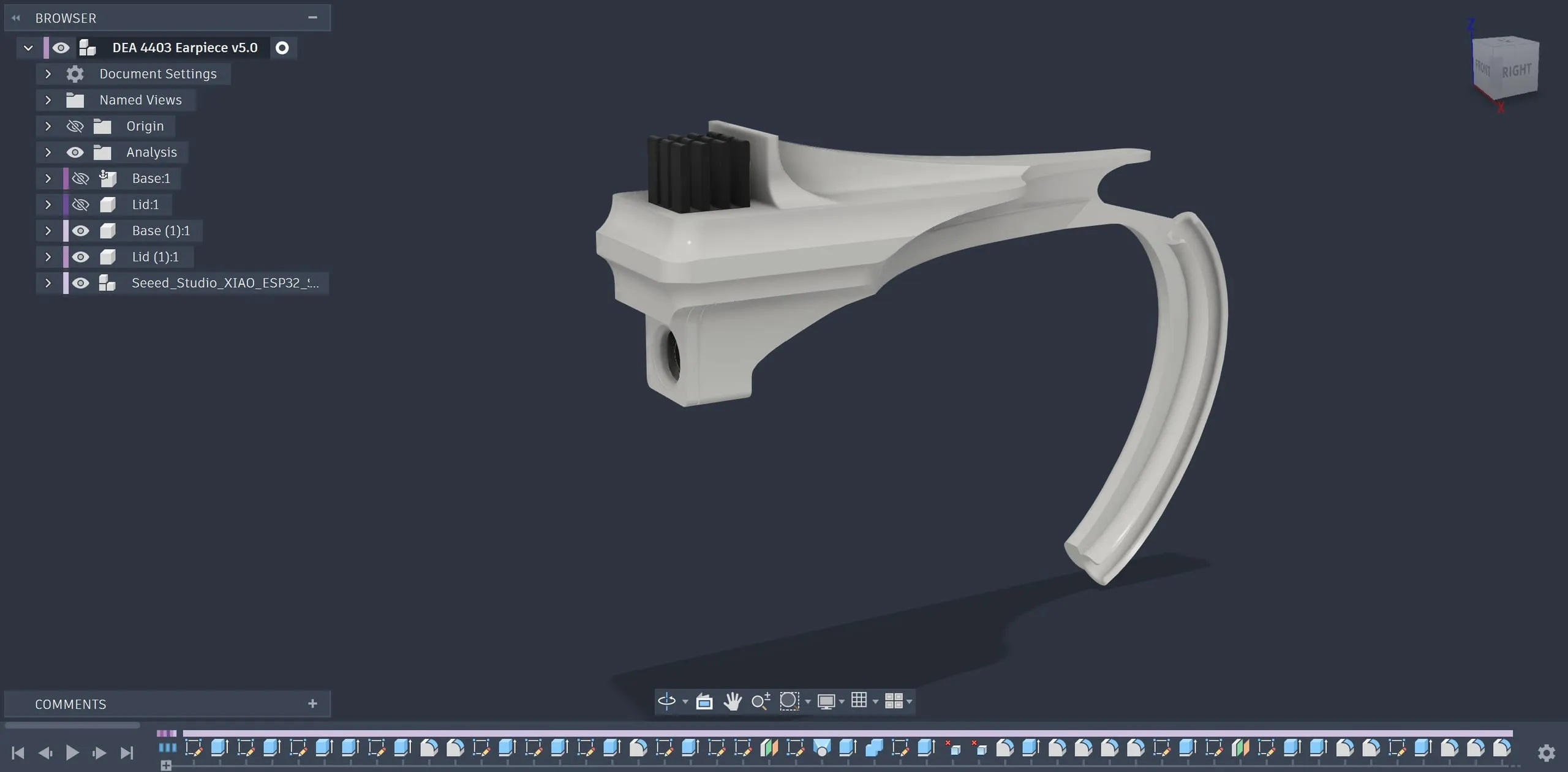
Rendered in Autodesk Fusion, where I experimented with various forms and ideas.