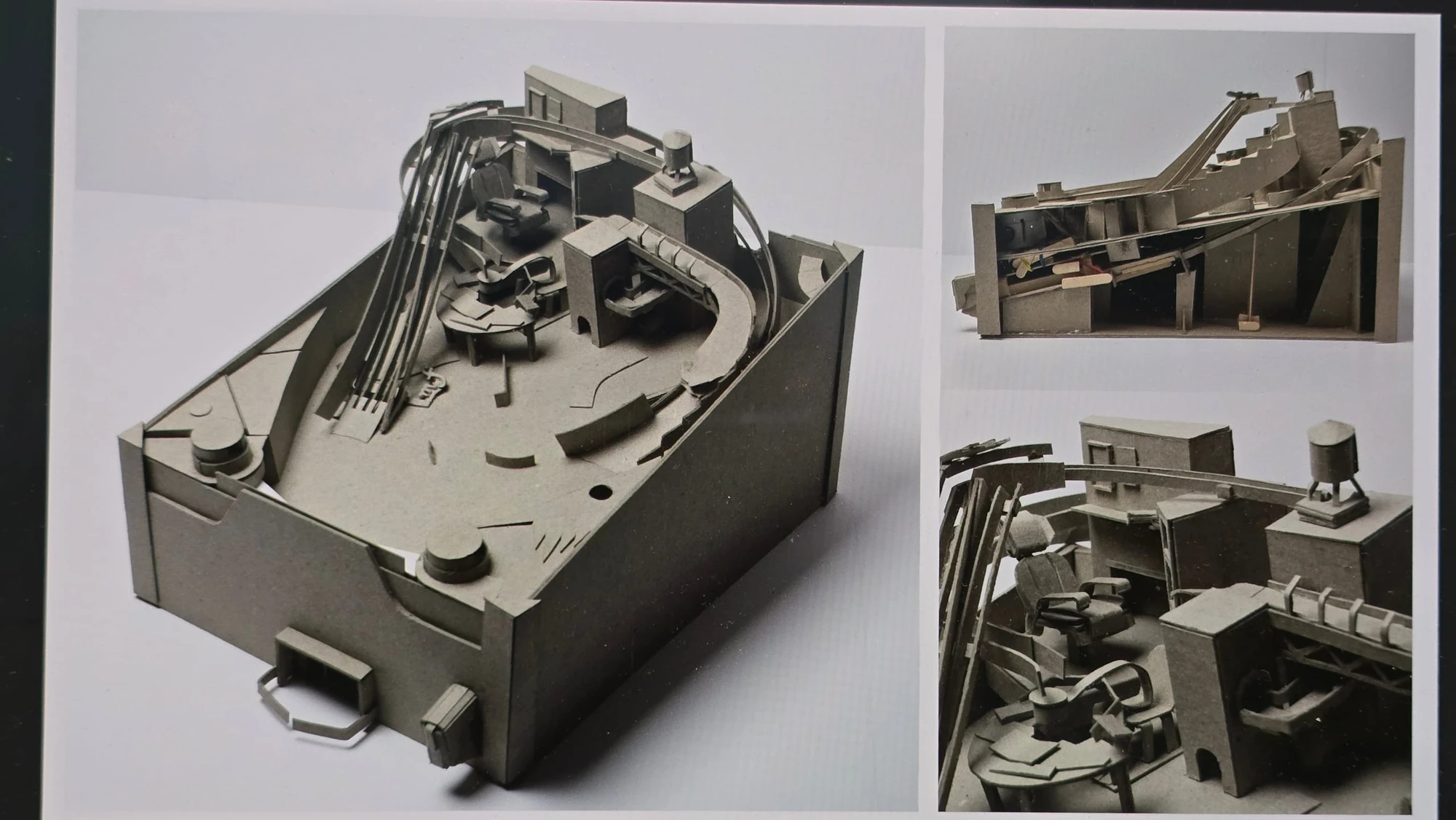
Game of Life
A game that shows my life in its metaphors
- Year
- 2023
- Tools
- 3D printing
- Medium
- Cardstock
- Year
- 2023
- Tools
- 3D printing
- Medium
- Cardstock
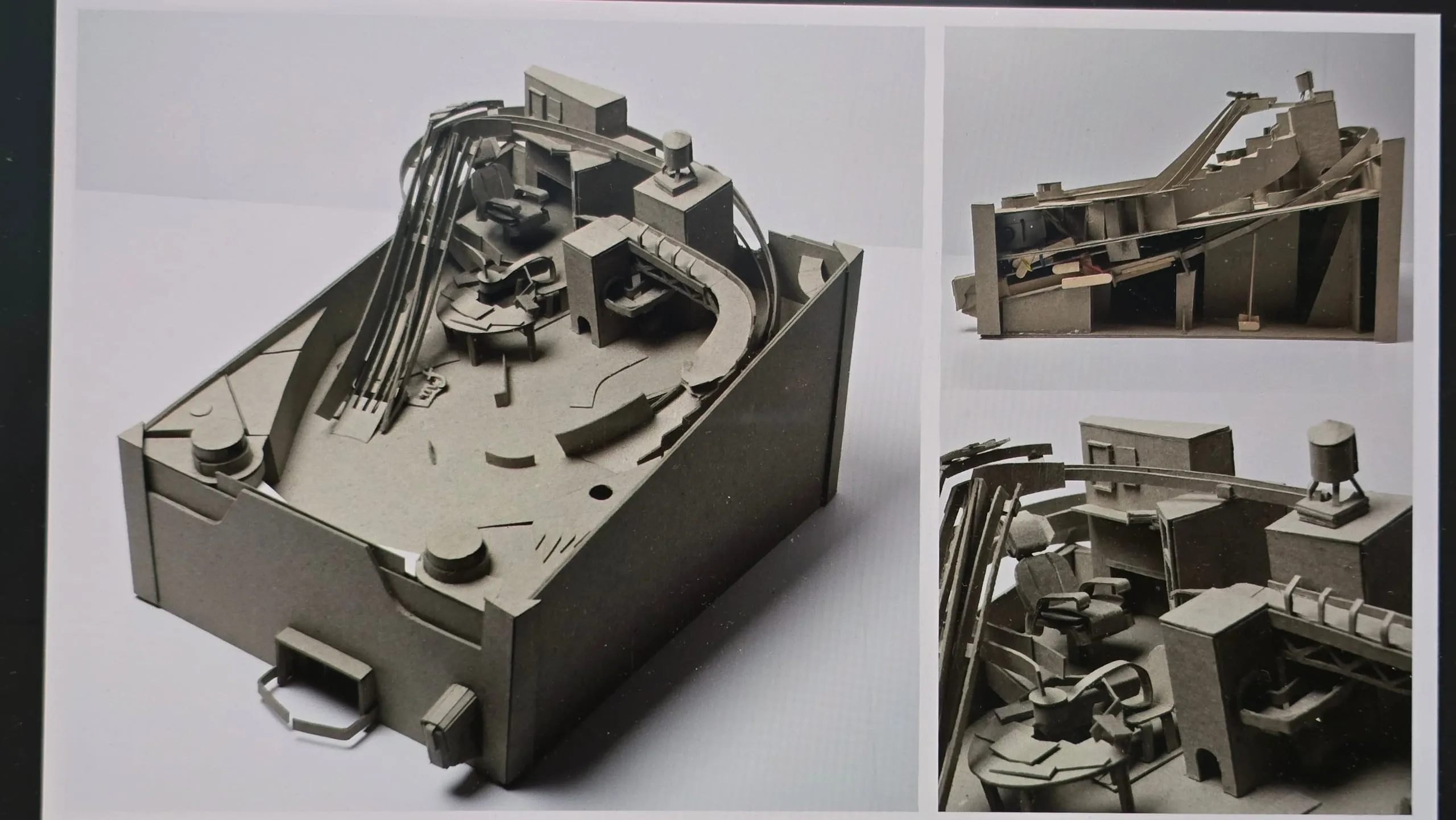
This is a fully functional cardstock pinball machine that represents major turning points of my life. It has a launching system, two paddles that can precisely change the ball’s trajectory based on positioning, and a hidden alternating pathway system guaranteeing that the ball will never take the same path twice through the cityscape section of the game.
Cardboard was the first material I had access to as a child, when I would spend my weekends building whimsical creations. I used similar, “close-to-home” materials such as popsicle sticks and rubber bands for the launching system, connecting my designer roots to where the game begins. I modeled and 3D printed custom flippers to represent my interests at the time, which were in learning 3D printing. The various small details and techniques I used throughout this functional landscape pay homage to the sculpture techniques I learned through years of experience.
I planned this machine to take the ball on a journey through my own story, which has its own variations and combinations.
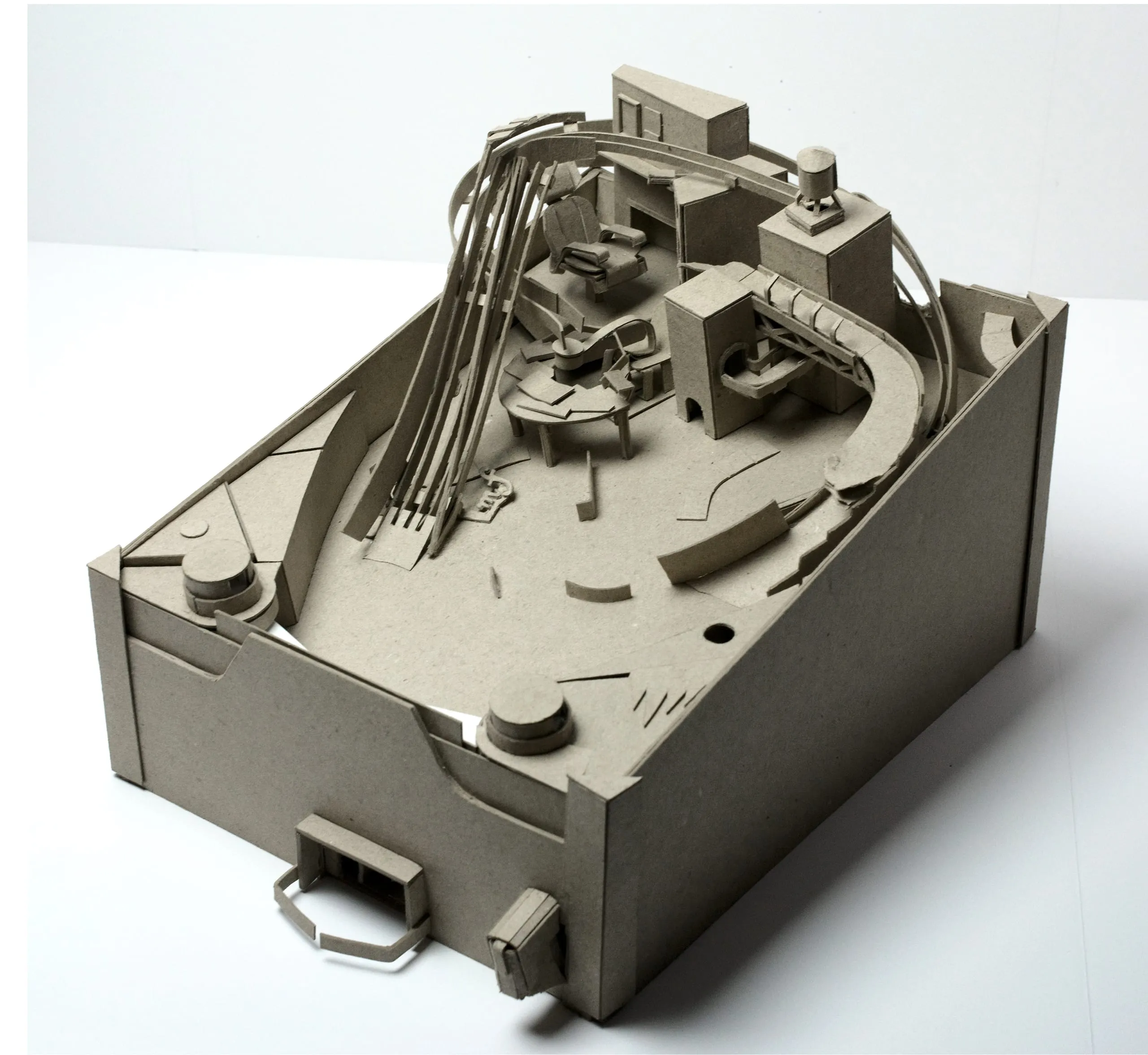
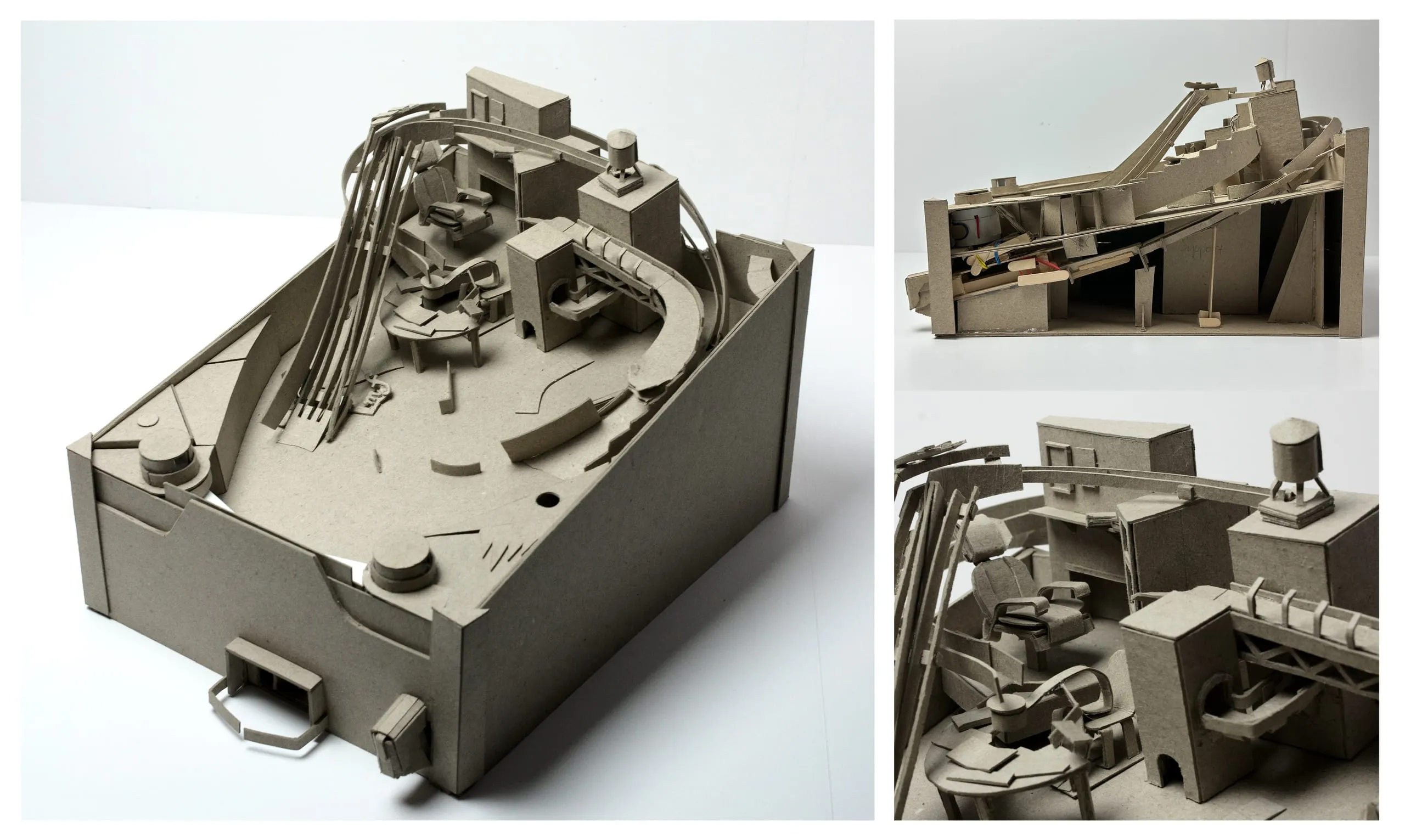
The ball is launched by pulling a tensioned ram and pushing a button to catapult it up and across the back of the map. It curves around a bridge, a water tower, and a lounge area with a fireplace that I imagine in my future house and a padded office chair. The chair is a reference to my Paper Desk work, which has its own home on this site. The ball slows around its final curve, dropping on top of the head of a stressed-out Aiden in his college application season. I created it while I was struggling with college applications, knowing that even though I was struggling at the time, I would look upon this experience with nostalgia, and perhaps a hint of humor, through this design choice.
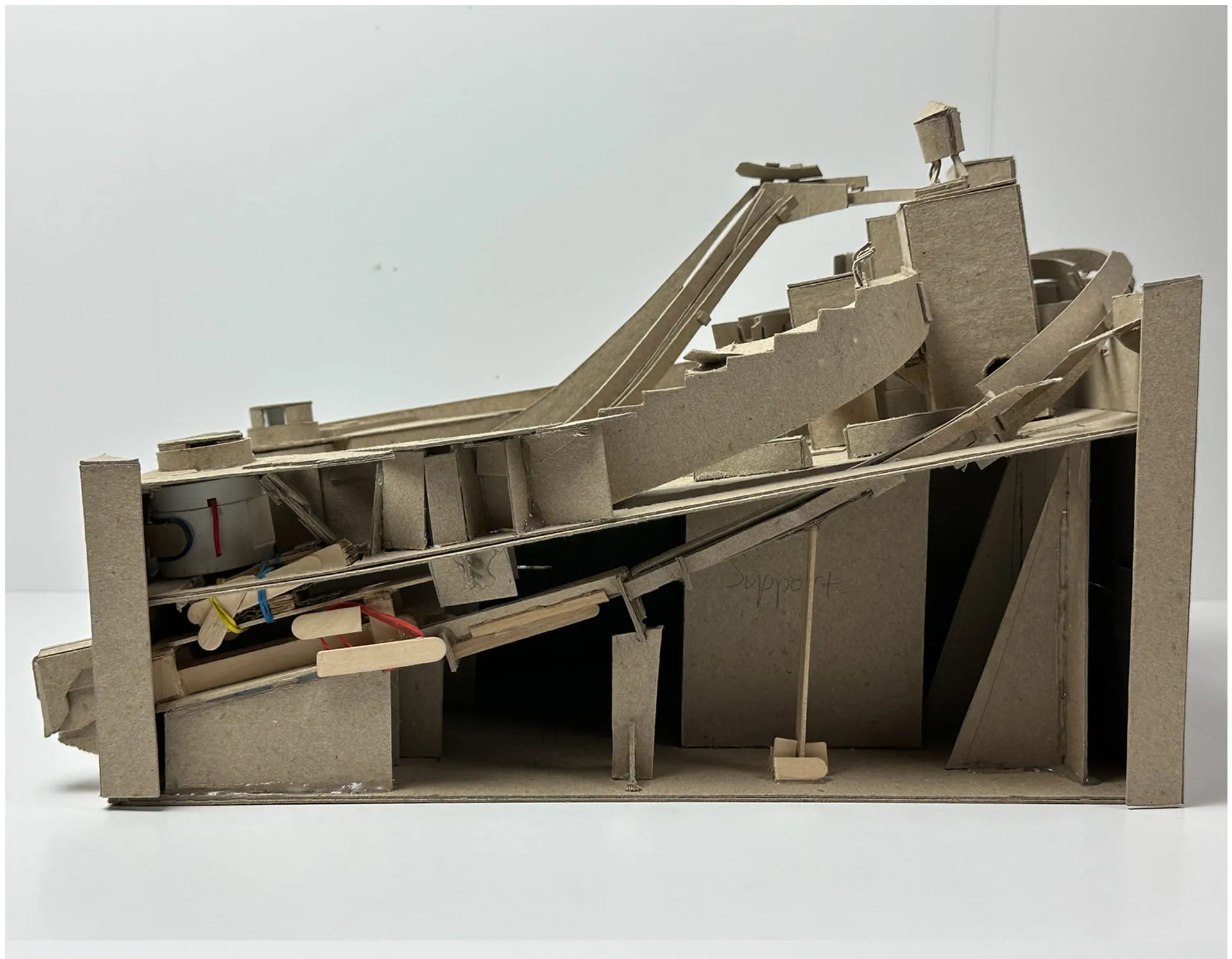
The Game of Life features two main ramps: a music-themed ramp on the left leading to a small cityscape and a bridge-themed ramp on the right that changes pathing depending on the speed of the ball.
The left ramp’s structure of five parallel rails reflects standard musical measure writing. Acute observers will notice note markings attached to the ramp in a sequence and then realize they got rickrolled in the most analog way possible.
Upon climbing the ramp, the ball rolls horizontally to a water tower: a structure that has been present throughout my life. It drops into the tower, underneath which is a toggle that switches the ball’s trajectory to the other of two paths that it hadn’t taken before. One path drops it to the floor of the landscape, and the other one carries the ball around a small walkway before bringing it down.
The right ramp carries the ball underneath an old bridge, reminiscent of New York City’s labyrinth of above-ground roads and subway rails. If the ball is launched quickly, it rumbles across the bridge and drops to the floor. If it is launched more slowly, it strolls across the bridge before dropping down to the aforementioned walkway.
I modeled and 3D printed the flippers, which allow the user to vary the ball’s angle of launch and its power. This was one of my first functional 3D prints, which gave me trouble because I didn’t know that layer lines tremendously impact smoothness of moving parts. I later applied this knowledge to the drawers of my Dynamic Speaker Cradles project, which also has a home on this site.
The Game of Life features two main ramps: a music-themed ramp on the left leading to a small cityscape and a bridge-themed ramp on the right that changes pathing depending on the speed of the ball.
The left ramp’s structure of five parallel rails reflects standard musical measure writing. Acute observers will notice note markings attached to the ramp in a sequence and then realize they got rickrolled in the most analog way possible.
Upon climbing the ramp, the ball rolls horizontally to a water tower: a structure that has been present throughout my life. It drops into the tower, underneath which is a toggle that switches the ball’s trajectory to the other of two paths that it hadn’t taken before. One path drops it to the floor of the landscape, and the other one carries the ball around a small walkway before bringing it down.
The right ramp carries the ball underneath an old bridge, reminiscent of New York City’s labyrinth of above-ground roads and subway rails. If the ball is launched quickly, it rumbles across the bridge and drops to the floor. If it is launched more slowly, it strolls across the bridge before dropping down to the aforementioned walkway.
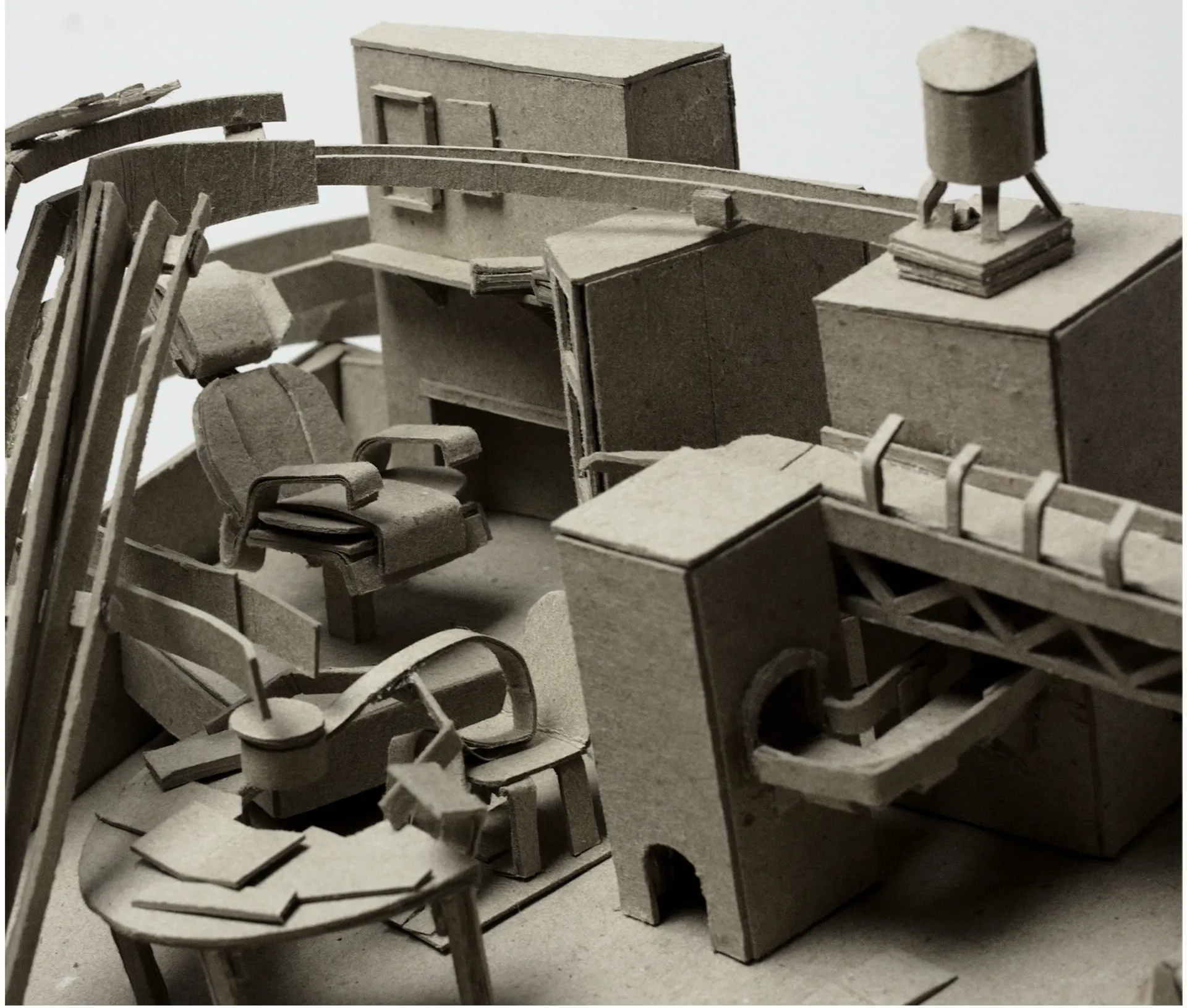
I modeled and 3D printed the flippers, which allow the user to vary the ball’s angle of launch and its power. This was one of my first functional 3D prints, which gave me trouble because I didn’t know that layer lines tremendously impact smoothness of moving parts. I later applied this knowledge to the drawers of my Dynamic Speaker Cradles project, which also has a home on this site.
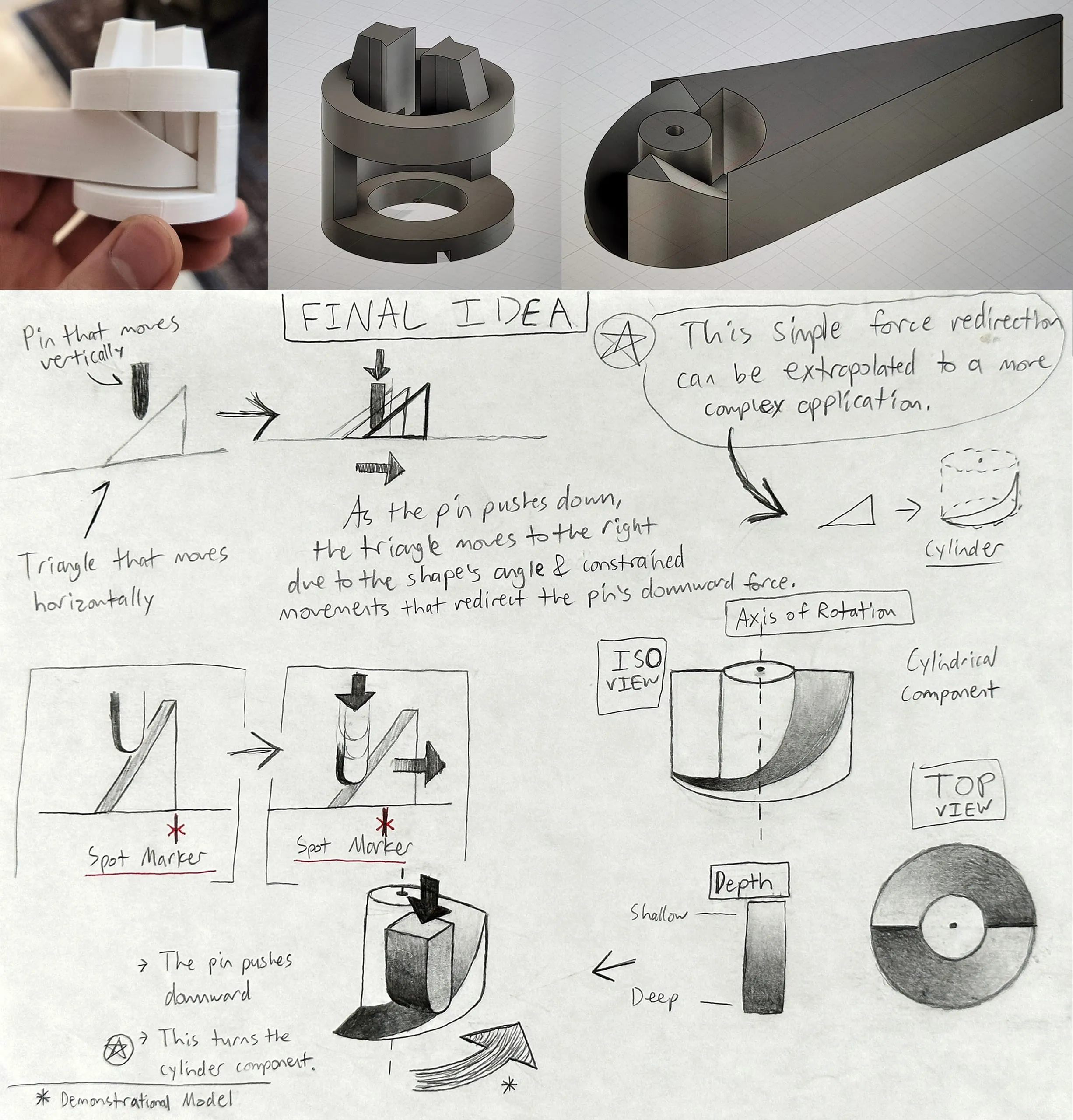
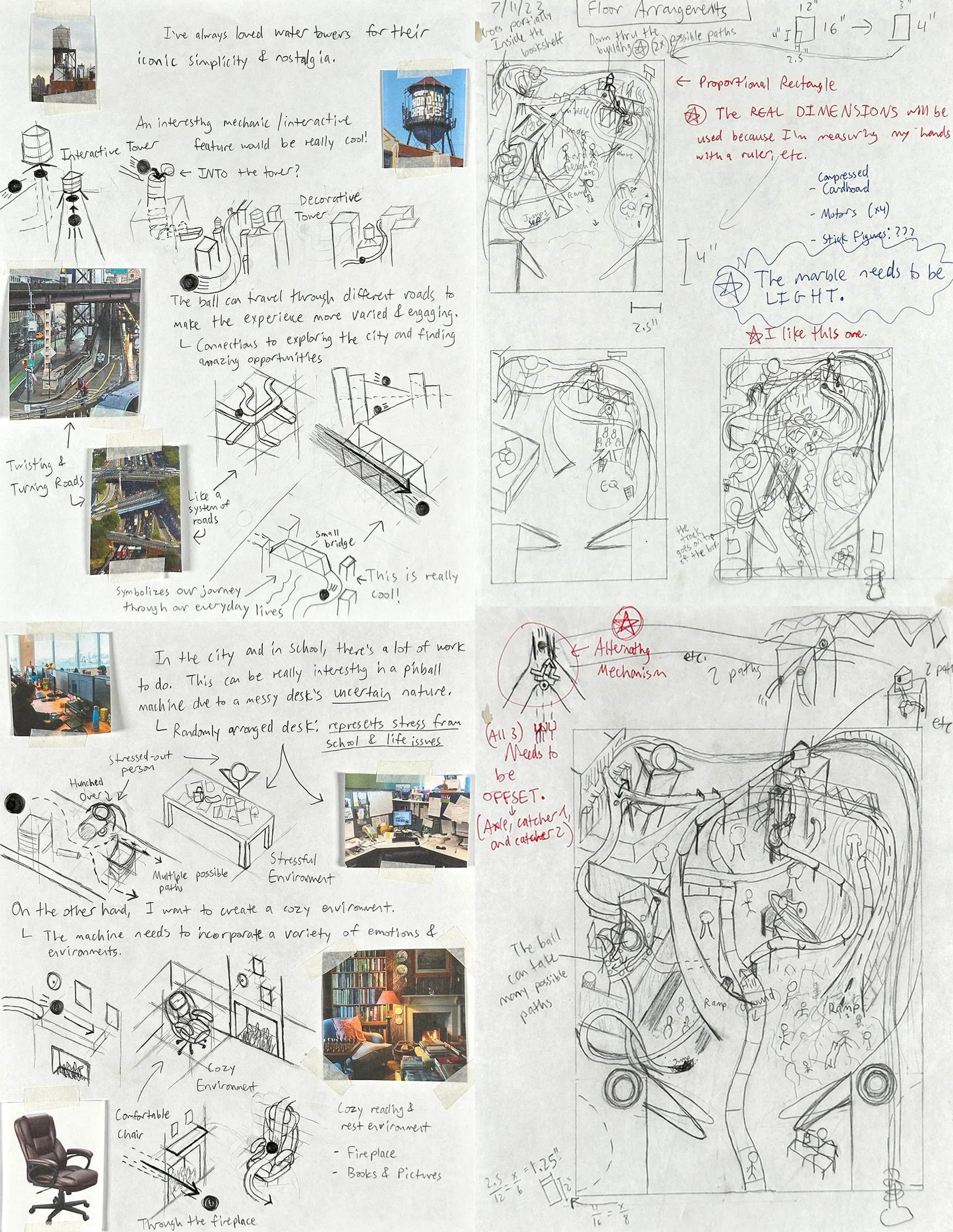
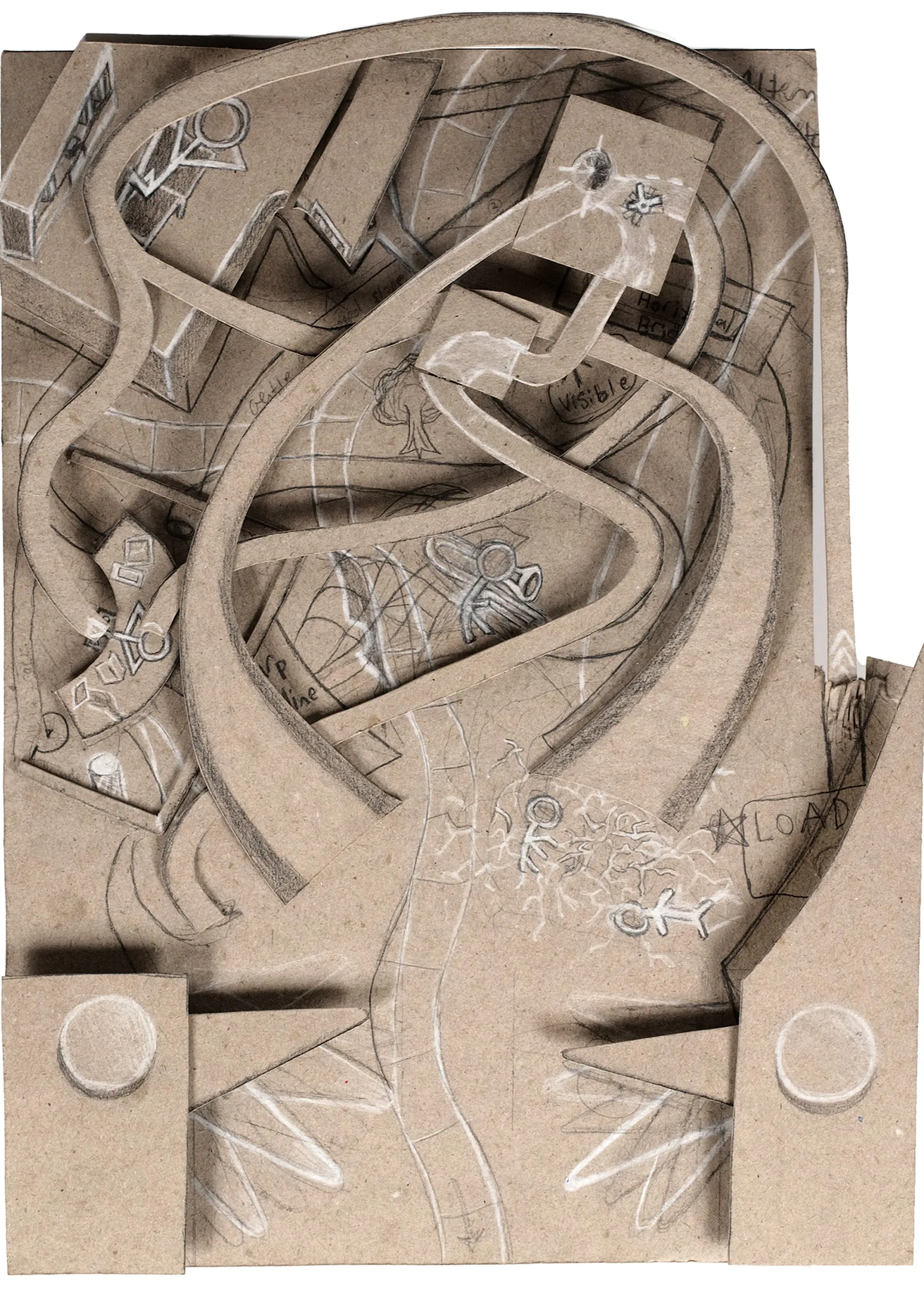
This project was a tremendous test of trial and error, as my physical and mental iterations bounced ideas off of each other, evolving the idea of a simple pinball machine into the storytelling object it is now.
Making this machine helped me understand how my unique passions, skills, and experiences shaped me into my current self. It gave me confidence to present my work in the future, leading me to where, and who, I am now.